About Buckeye Excavation Experts
Steady, properly engineered dirt work is what Buckeye Excavation Experts stands behind, from site grading and trenching to foundation excavation across Buckeye. Our crews plan each cut and compaction pass so soil, utilities, and structures hold up for decades. Heading into 2026, that longevity-first approach still guides every job. Read on to see how we work.
Request a Written Estimate 480-462-6688Talk With Our Team
Share a few details about your Buckeye property and the excavation work you are planning, and we will follow up with clear next steps.
Our Background
The Buckeye Excavation Experts Story
Excavation work in the West Valley teaches lessons that no brochure can. Caliche layers, expansive clay pockets, and shifting desert soils shaped how our crews approach subgrade preparation, moisture conditioning, and compaction testing on every Buckeye site. That field experience is why we focus on site grading and dirt work, hydro excavation, trenching and utility excavation, and foundation and basement excavation rather than spreading thin across unrelated trades. Most of our clients are Buckeye homeowners dealing with drainage that pushes water toward a slab, settling backfill over a utility trench, or a pad that needs correct slope before concrete arrives. The longevity-first mindset came from returning to sites years later and seeing which methods held. Proper lift thickness held. Rushed backfill did not. In 2026 we still document grade elevations, walk the finished work with the property owner, and explain how preventative grading and careful trench restoration protect structural integrity and reduce premature deterioration over time.
What Experience Do We Bring to Buckeye Properties?
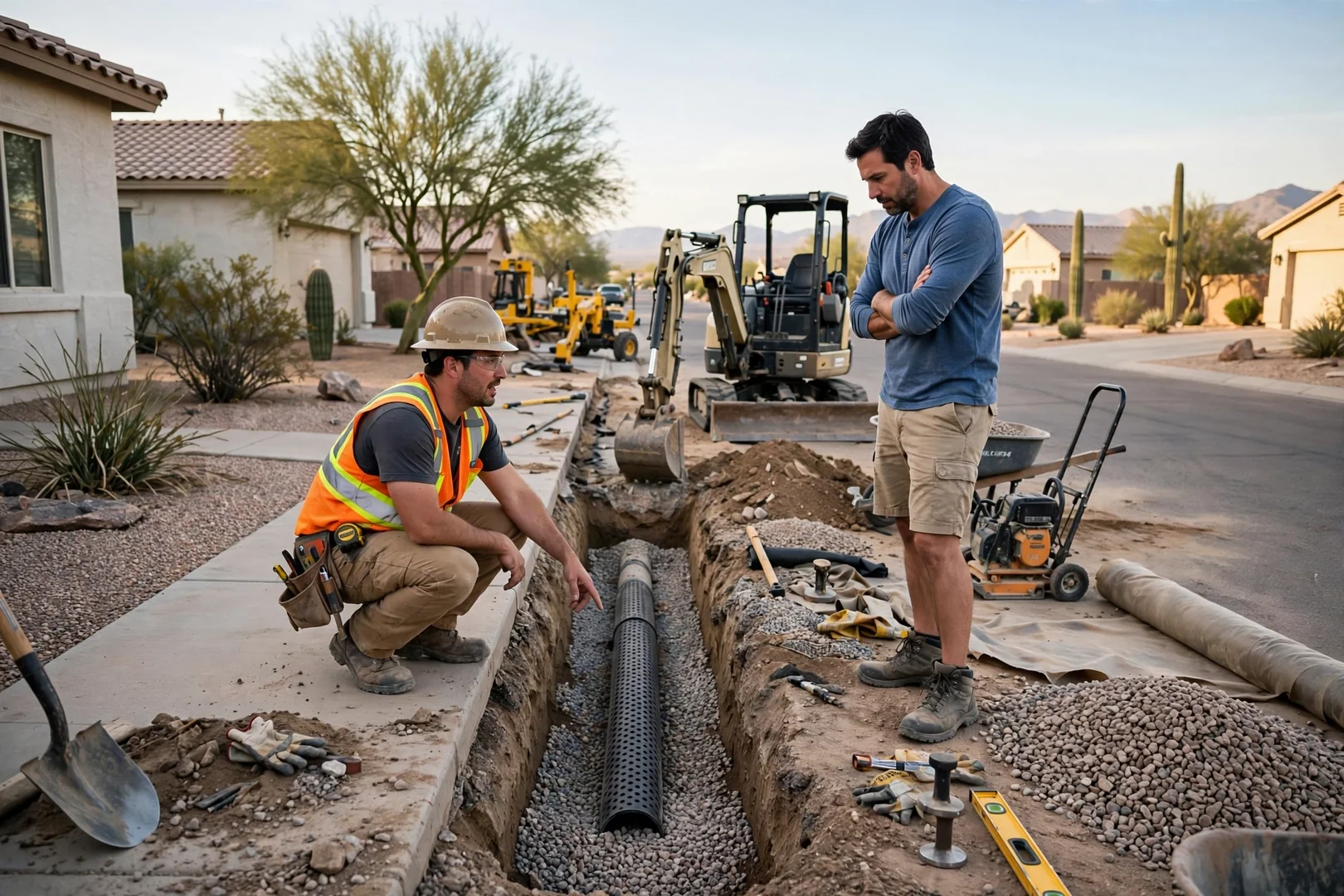
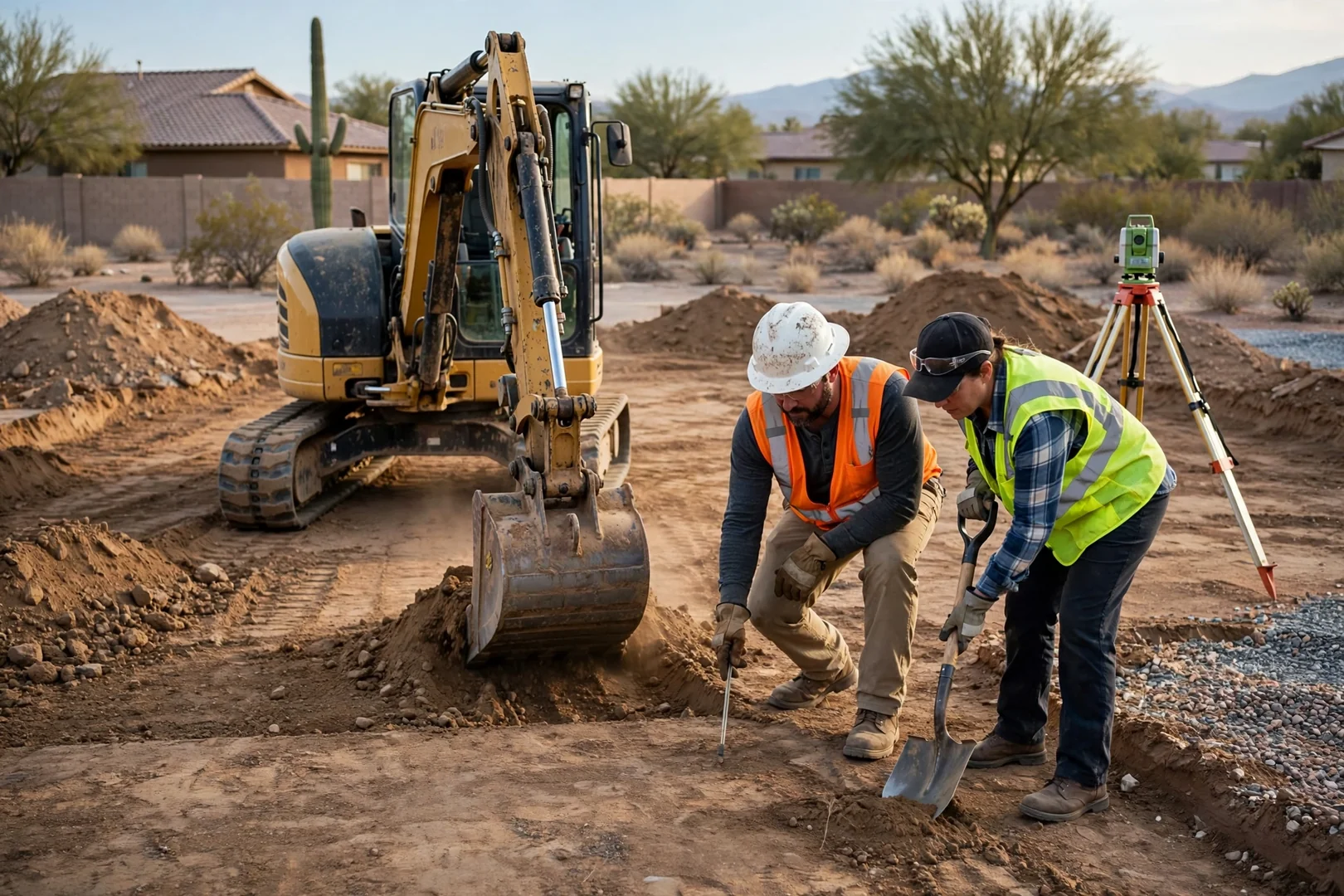
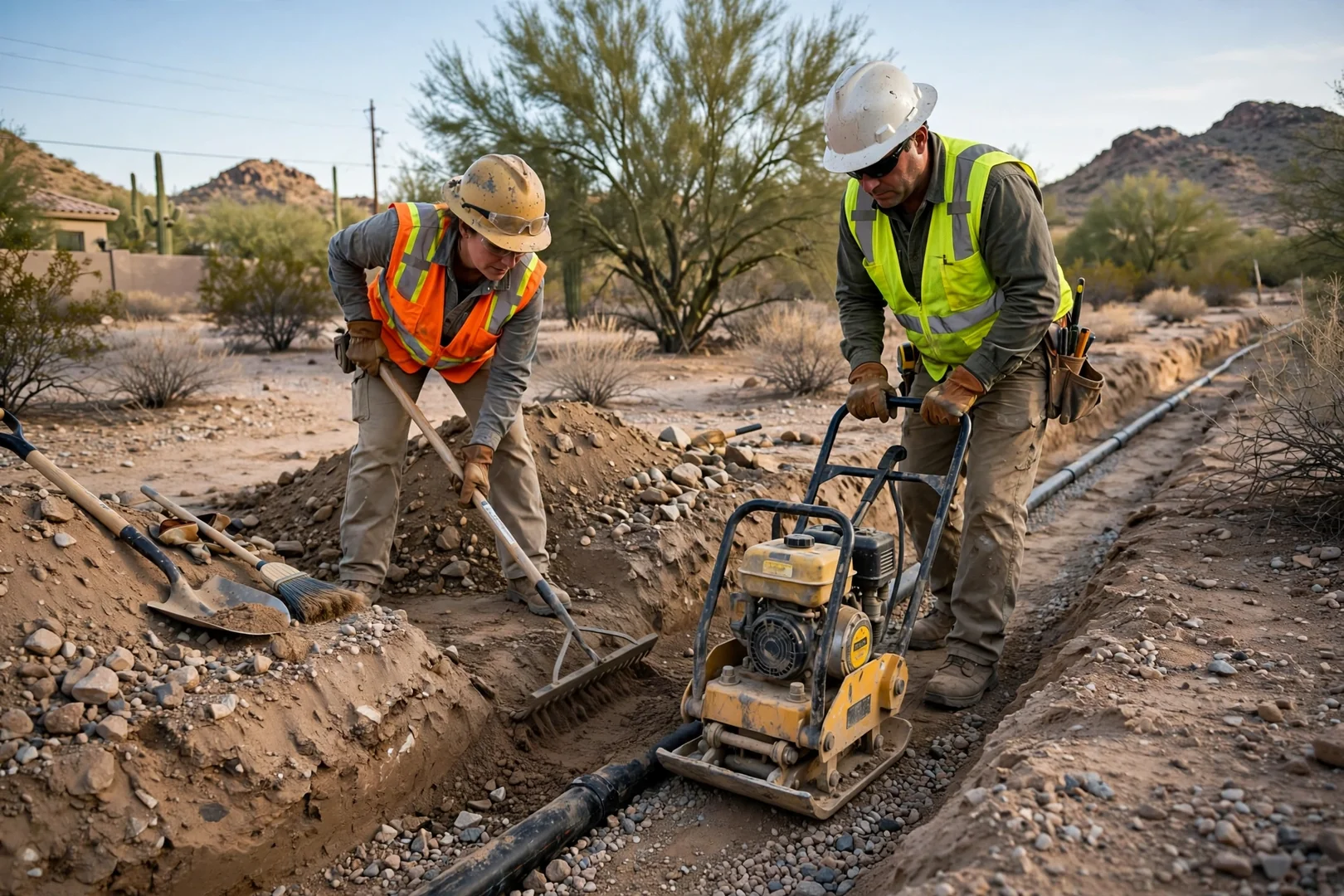
Our team brings hands-on excavation experience across the full range of soil and site conditions found throughout Buckeye, from hardpan caliche and rocky fill to loose sandy washes that need careful shoring. That variety matters because subgrade behavior changes block by block. Crews have cut building pads, corrected negative drainage slopes, set trench bedding for water and sewer lines, and used hydro excavation to expose live utilities without striking conduit. Equipment selection follows the condition, not habit, so a tight residential side yard may call for a mini excavator and hand grading while a larger pad requires a dozer, laser grade control, and a sheepsfoot roller for compaction.
Technique has evolved alongside the tools. Vacuum excavation now handles far more utility locating work than blind hand digging did years ago, and compaction verification has become a routine checkpoint rather than an afterthought. Throughout 2026, our Buckeye projects continue to follow the same sequence: locate and mark, excavate in controlled lifts, verify moisture content, backfill properly, then finish grade to drain water away from foundations. We provide written estimates before work begins and complete a walkthrough when the job ends. Experience shows up in what does not fail later.
What Standards Guide Our Excavation Work?
Every dig starts before a bucket touches the ground, with utility locates requested and marked, a site walk to note slope and access points, and a written scope the homeowner reviews first. Crews wear task-appropriate PPE, including high-visibility vests, hard hats, and eye protection, and trench depth decisions follow industry-standard shoring and benching practices rather than guesswork. Machines get a documented walkaround check each morning, covering hydraulic lines, track tension, fluid levels, and backup alarms, because a leaking cylinder or worn undercarriage pin can turn into a stalled job and a torn-up yard. Dust control and spoil containment matter in Buckeye, so water application and haul-off staging are planned instead of improvised.
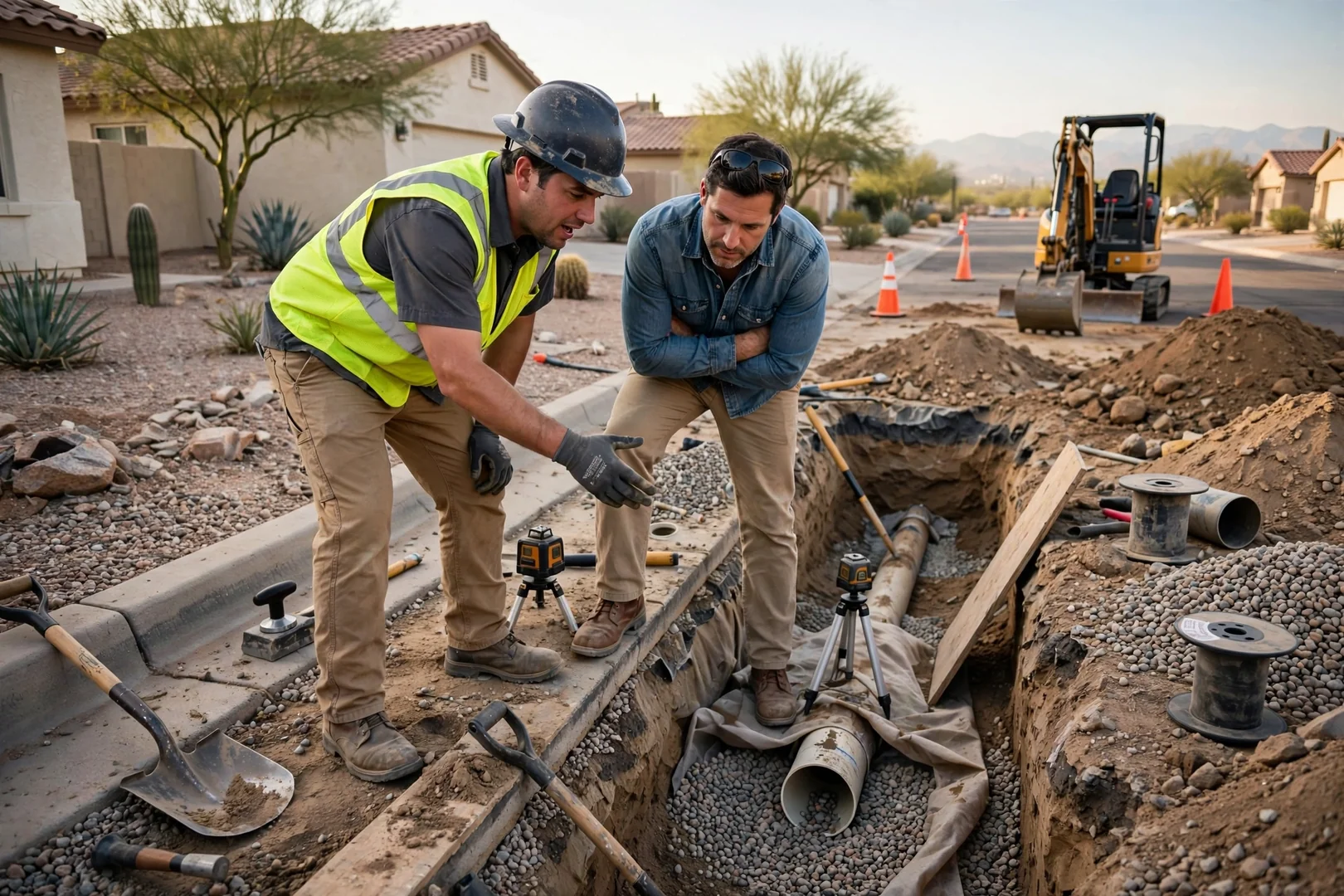
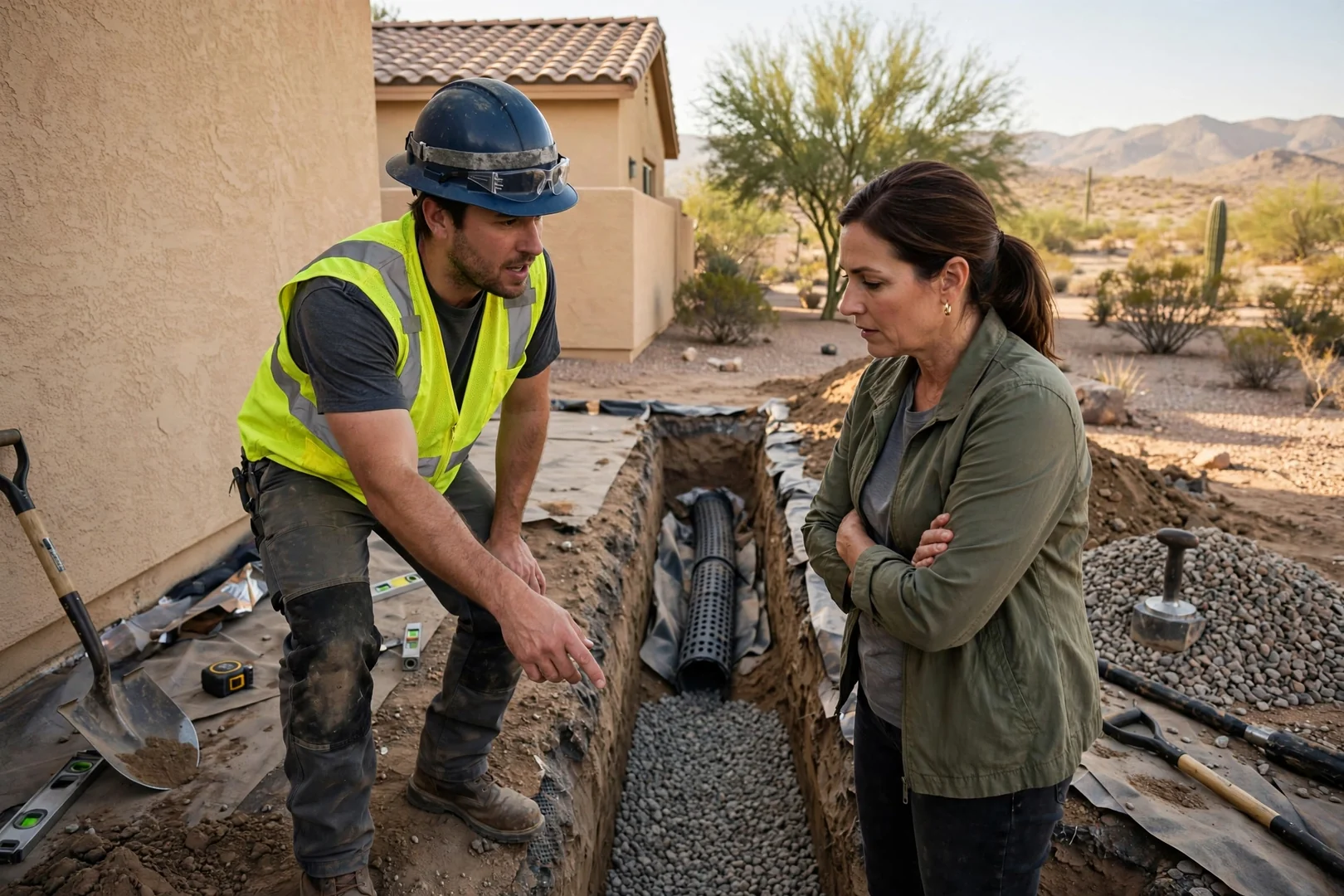
Documentation follows the work from start to finish. Depth measurements, bedding material, and backfill lift thickness are recorded as trenches are closed, and compaction is built up in controlled layers so the surface above does not settle months later. Current 2026 local permitting and inspection requirements shape how we sequence utility excavation and foundation digs, and we schedule around inspection holds rather than covering work early. Photos of subgrade conditions are kept for the homeowner’s records. Each project closes with a post-job walkthrough covering restored grade, drainage direction, and what to watch for as the soil settles, which is the simplest way to protect long-term stability.
- Local Experience and Equipment -
How Are We Equipped for Buckeye Properties?
Soil conditions around Buckeye drive nearly every equipment decision we make. Much of the west valley sits over caliche hardpan layered under loose desert sand, so a dig that starts easy can hit cemented material a few feet down and require different bucket teeth, ripper attachments, or a shift to hydro excavation where buried lines are close. Monsoon runoff is the other factor, since flat lots and shallow washes concentrate water fast, making laser-guided grade work and positive drainage slope more than cosmetic details. Newer subdivisions in Buckeye tend to have tight side-yard access and dense utility corridors, while older acreage parcels often have unmarked septic lines and private water laterals, both of which change how we probe and expose before digging. Operators are trained on load limits, spoil placement, and trench entry rules for the machine they are running, and every piece of equipment gets routine inspection of hydraulics, tracks, cutting edges, and vacuum seals. In 2026 we continue planning summer digs around heat and dust control requirements, which keeps compaction results consistent and reduces rework on Buckeye properties.
- How We Work -
How Do We Approach Every Excavation Job?
Each job is approached as groundwork that has to hold up for decades, so we plan the dig around soil behavior, drainage, and what gets built on top rather than simply moving dirt quickly. That begins with a site assessment: existing grade, slope direction, caliche depth, utility markings, and any signs of past settlement or erosion near foundations. Scope decisions are explained in plain terms before work starts, including why a trench may need wider bedding or why subgrade needs moisture conditioning before compaction, and the written estimate reflects that reasoning. Backfill goes in measured lifts and gets compacted in stages, because rushed backfill is the most common cause of sunken trenches and cracked slabs years later. We protect driveways and landscaping with mats and staging plans, then haul off spoil and sweep hard surfaces at the end. Finish grade is checked again during a walkthrough. Through 2026 we have kept the same closing habit: showing homeowners where water will travel after a storm, so they understand how the finished surface protects the property over time.
Click Me to Call: 480-462-6688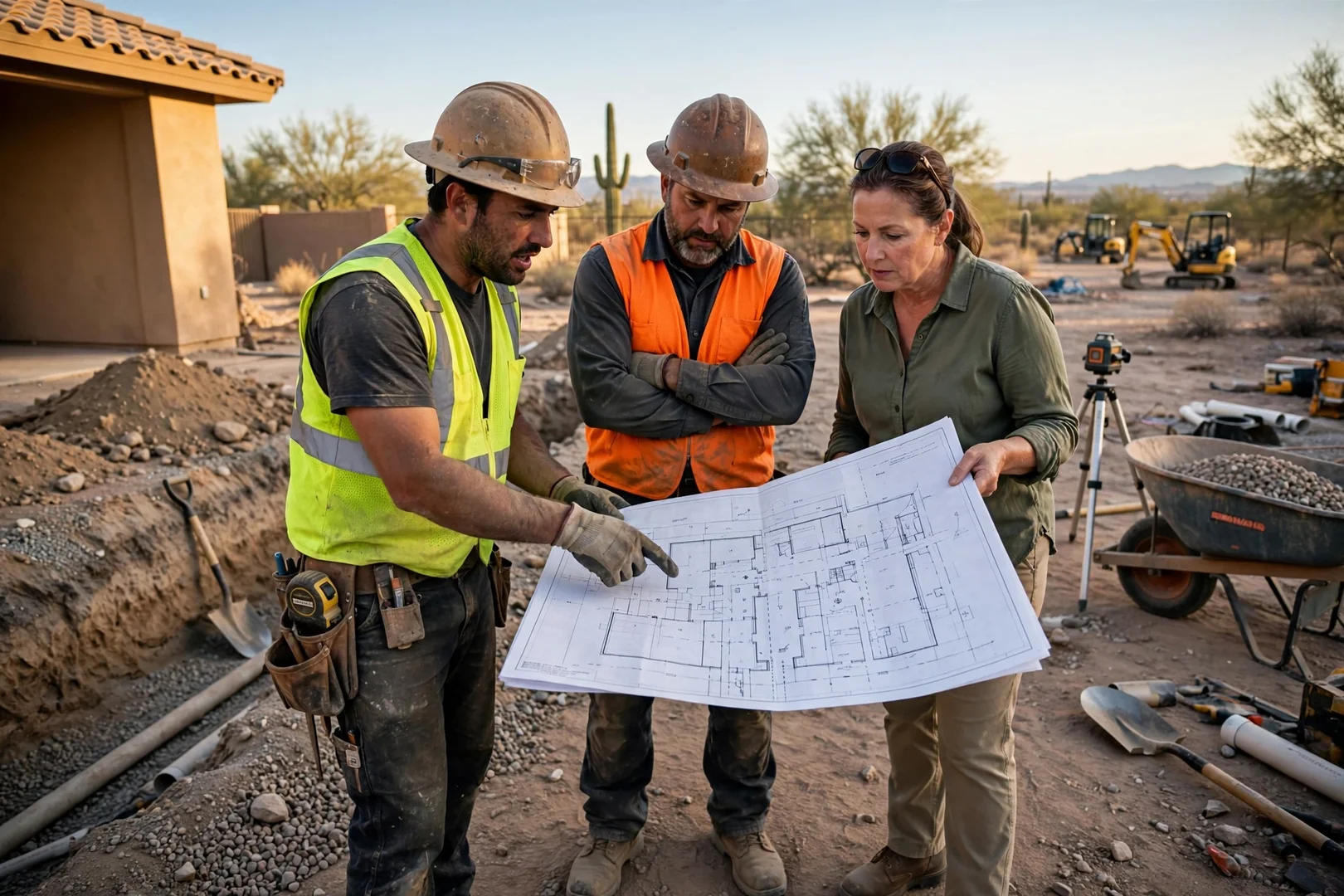
What Can Buckeye Customers Expect From Us?
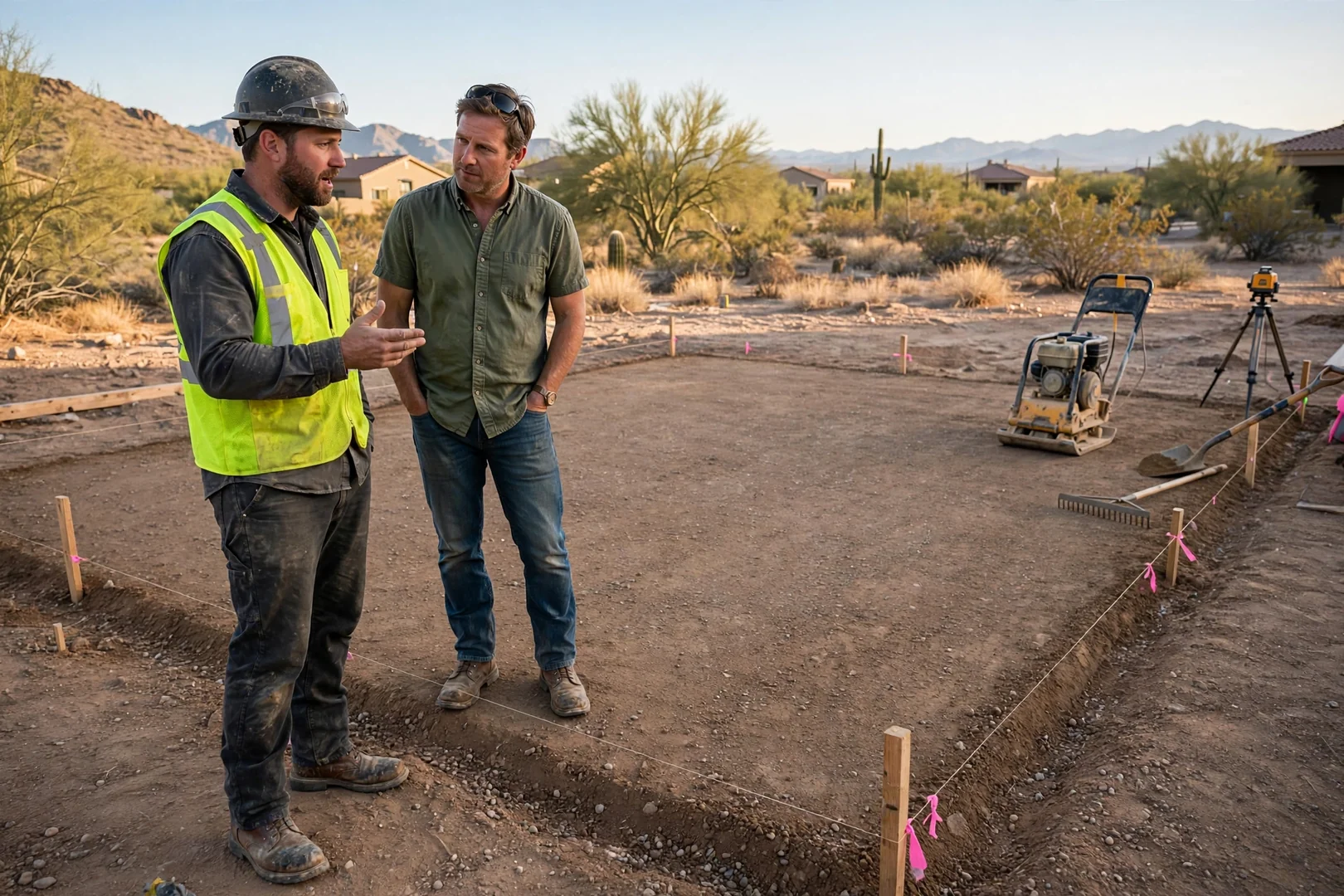
Every project starts with a written estimate that lists the scope of dirt work, the compaction targets, and the equipment we plan to bring on site, so there are no surprises once the excavator arrives. We confirm arrival windows ahead of time, mark utility locates before any trenching begins, and keep spoil piles and haul routes away from driveways, irrigation lines, and landscaping. Photo documentation is taken before, during, and after excavation, which gives homeowners a clear record of subgrade conditions, bedding material, and backfill lifts that are otherwise buried out of sight. Pricing is explained line by line, including hauling and import fill, so you understand what each portion of the work covers.
Work is not finished when the machines leave. We walk the property with you at the end of the job, reviewing grade transitions, drainage slope, and compacted surfaces so you can see how the site will shed water during monsoon season. Through 2026 we continue to build every scope around longevity, because proper subgrade preparation and controlled backfill are what prevent settling, cracked slabs, and premature deterioration years down the road. Questions after completion get answered. That quiet follow-through is how we protect the condition of Buckeye properties over the long term.
Neighborhoods We Serve
Excavation Contractor Service Across Buckeye
Crews travel throughout Buckeye and the surrounding West Valley, covering North Buckeye, Downtown Buckeye, the Verrado and Sundance areas, and the newer subdivisions spreading south of the interstate. Residential lots, custom home sites, and commercial parcels all receive the same approach to grading, trenching, and utility excavation. Scheduling is organized by area so equipment moves efficiently and your street sees less disruption.
Local familiarity matters more than most homeowners expect. Buckeye soils shift between caliche layers, sandy washes, and expansive clay pockets, and each one changes how a trench is shored, how backfill is compacted, and how a pad is sloped for monsoon runoff. Knowing which conditions appear in which parts of town lets us plan the right machine, the right bedding material, and the right drainage pitch from the start, which is what keeps foundations, utilities, and finished surfaces performing for years.