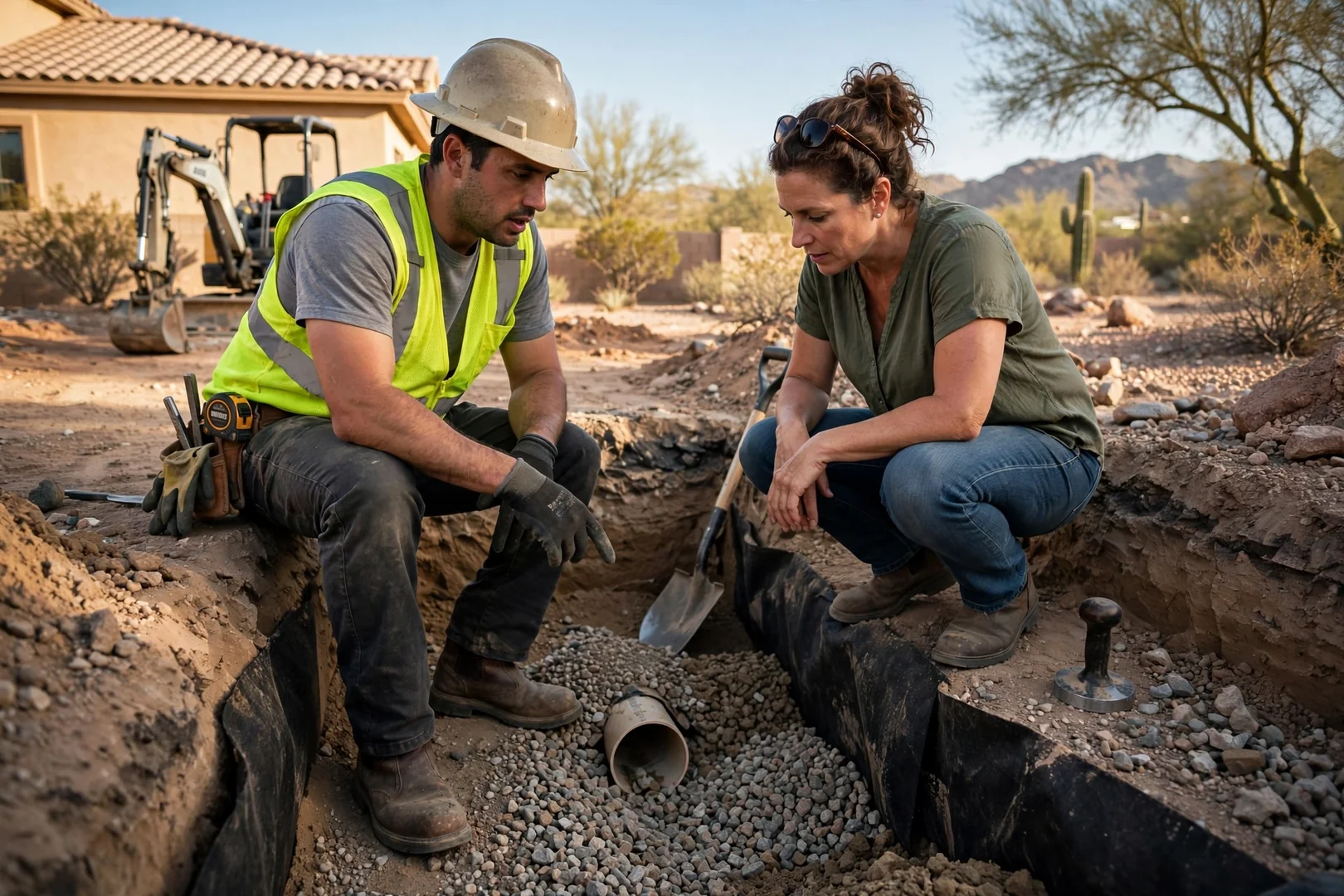
Hydro Excavation in Buckeye, AZ

Hydro excavation uses pressurized water and a vacuum system to break up and remove soil without cutting into buried lines, which makes it the safer choice for Buckeye homeowners who need to expose water laterals, irrigation mains, gas service, or conduit before any repair work begins. Much of the caliche-heavy soil around local subdivisions sits hard and compacted, so controlled daylighting and potholing let us verify utility depth and position without the risk a steel bucket brings. Our 2026 schedule covers both cooler-season projects and summer irrigation repairs, when desert landscape systems tend to fail under heat and pressure swings. Buckeye Excavation Experts handles the setup, spoils containment, and backfill so the surrounding ground and your existing lines stay intact for the long run. Precision protects what is already working.

Request a Written Estimate 480-462-6688

Ask About Hydro Excavation

Share your property details and what needs to be exposed. We will follow up to discuss access, soil conditions, and a written estimate.

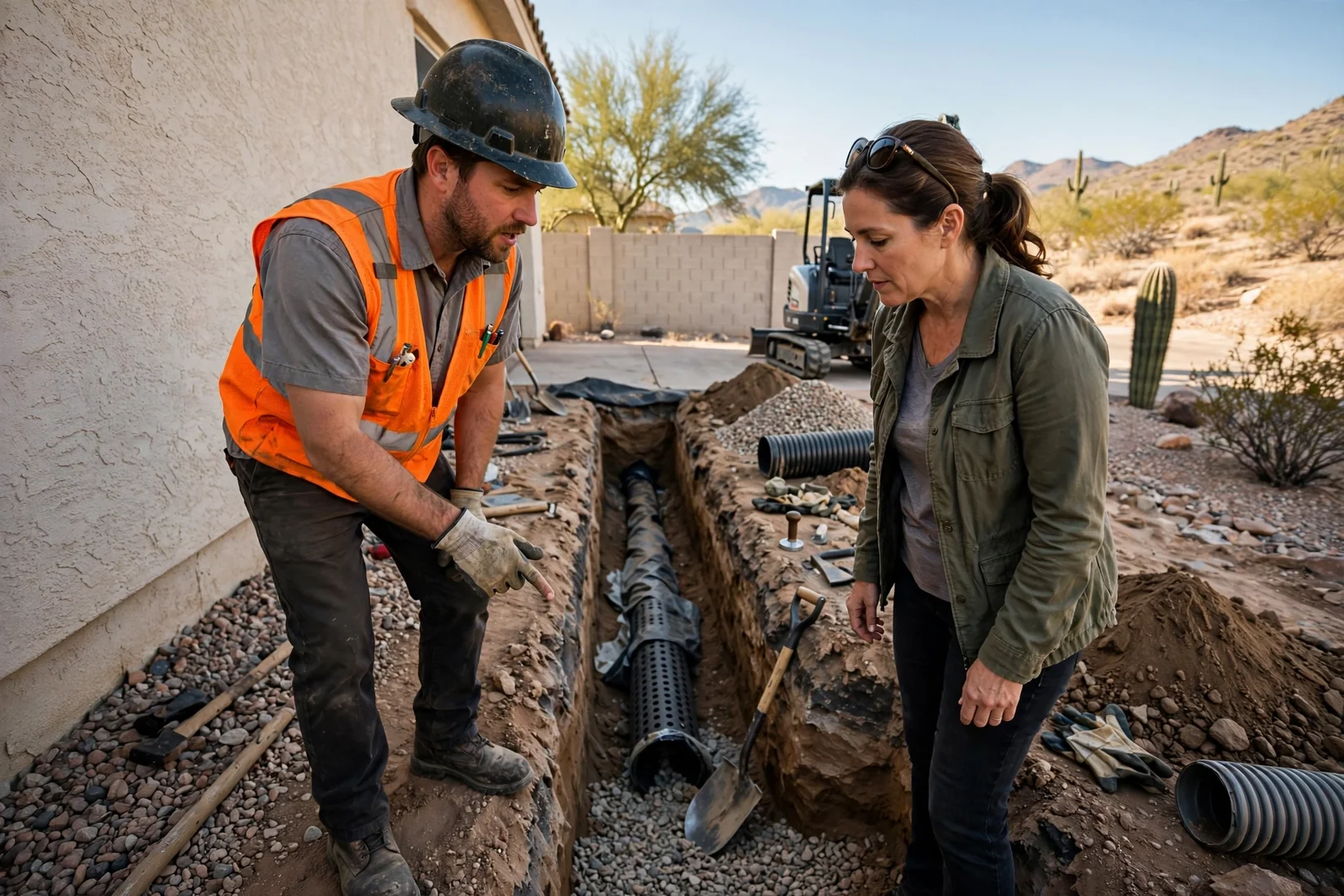
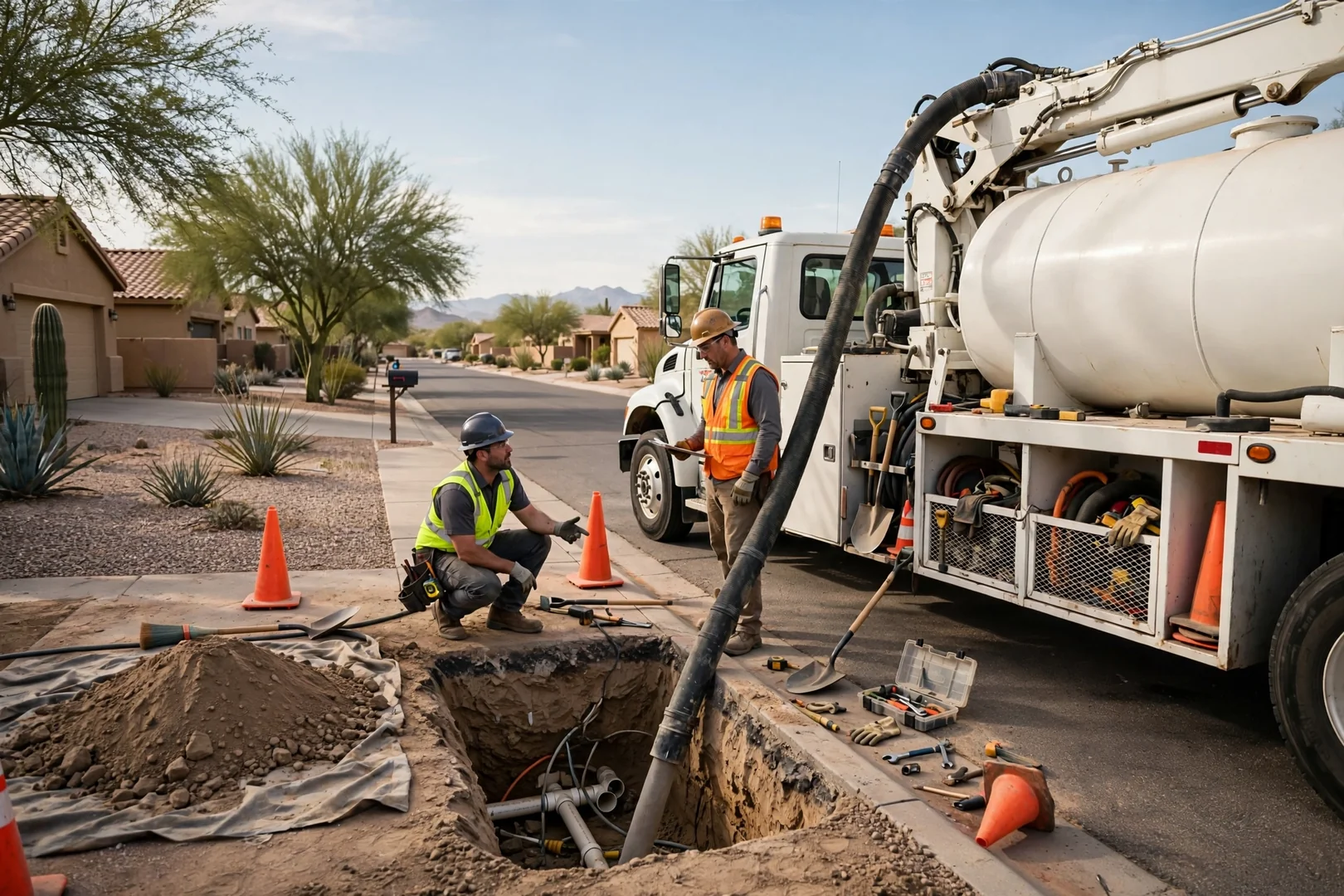
Vacuum truck crew performing hydro excavation beside a Buckeye residential yard

What Our Hydro Excavation Service Includes

Hydro excavation is the process of using a high-pressure water stream to loosen soil while an industrial vacuum lifts the slurry into a debris tank, and at Buckeye Excavation Experts it includes utility daylighting, potholing, slot trenching, and precise exposure of buried lines across Buckeye properties. Work begins with a utility locate review and a walk of the site, then our crew sets pressure and nozzle selection based on whether we are cutting through loose desert fill or dense caliche. Water does the digging, not steel. Because the stream removes soil without striking the pipe wall or conduit coating, existing water, sewer, gas, and electrical service stay undamaged, which directly supports the long-term reliability of those systems.

Residential lots, commercial pads, and multi-unit complexes all benefit from the same approach, though access and spoils handling differ with each site. On tight residential yards we keep the vacuum truck at the curb and run hose to the dig point so driveways, pavers, and mature landscaping avoid heavy equipment traffic and the surface compaction that shortens their lifespan. Heading into 2026 we continue scheduling many exposure jobs during cooler months when soil moisture is more predictable and backfill compacts more evenly. Every job finishes with proper backfill, compaction in lifts where required, and a post-job walkthrough so you can see exactly what was uncovered and how the ground was restored. Preventative care here protects pipe integrity for decades.

Related Excavation Services

What Signs Mean Your Property Needs Hydro Excavation?

Signs that your property needs hydro excavation include unexplained wet spots or soft soil over a buried line, unknown utility depths before a planned dig, irrigation pressure loss with no visible leak, and any repair that requires exposing a pipe or conduit without risking damage to it. Homeowners in Buckeye often notice a patch of lawn or gravel that stays damp through dry weeks, which usually points to a slow leak on a water lateral or irrigation main below grade. Others discover conflicting utility locate marks when adding a pool, casita, or detached garage, leaving the real depth of gas service or electrical conduit uncertain. Caliche layers make blind digging especially risky here. Sinking soil near a sewer cleanout, repeated breaks in the same stretch of line, and exposed conduit from erosion are also common triggers.

Each of these situations shares the same core problem: something buried needs to be seen before it can be repaired or built around. Mechanical digging in compacted desert soil can crack PVC, shear a service saddle, or nick cable insulation, and those small injuries often turn into failures years later. Hydro excavation resolves that by removing soil with water pressure and vacuum recovery, leaving the line fully exposed and undamaged for inspection or repair. Through 2026 we continue to see more Buckeye utility verification requests tied to home additions and landscape upgrades, and daylighting remains the method that protects both the existing system and the surrounding ground. Clear answers before the shovel moves save repairs later.

Protecting buried infrastructure now keeps your property performing predictably for years.

Schedule a Site Assessment
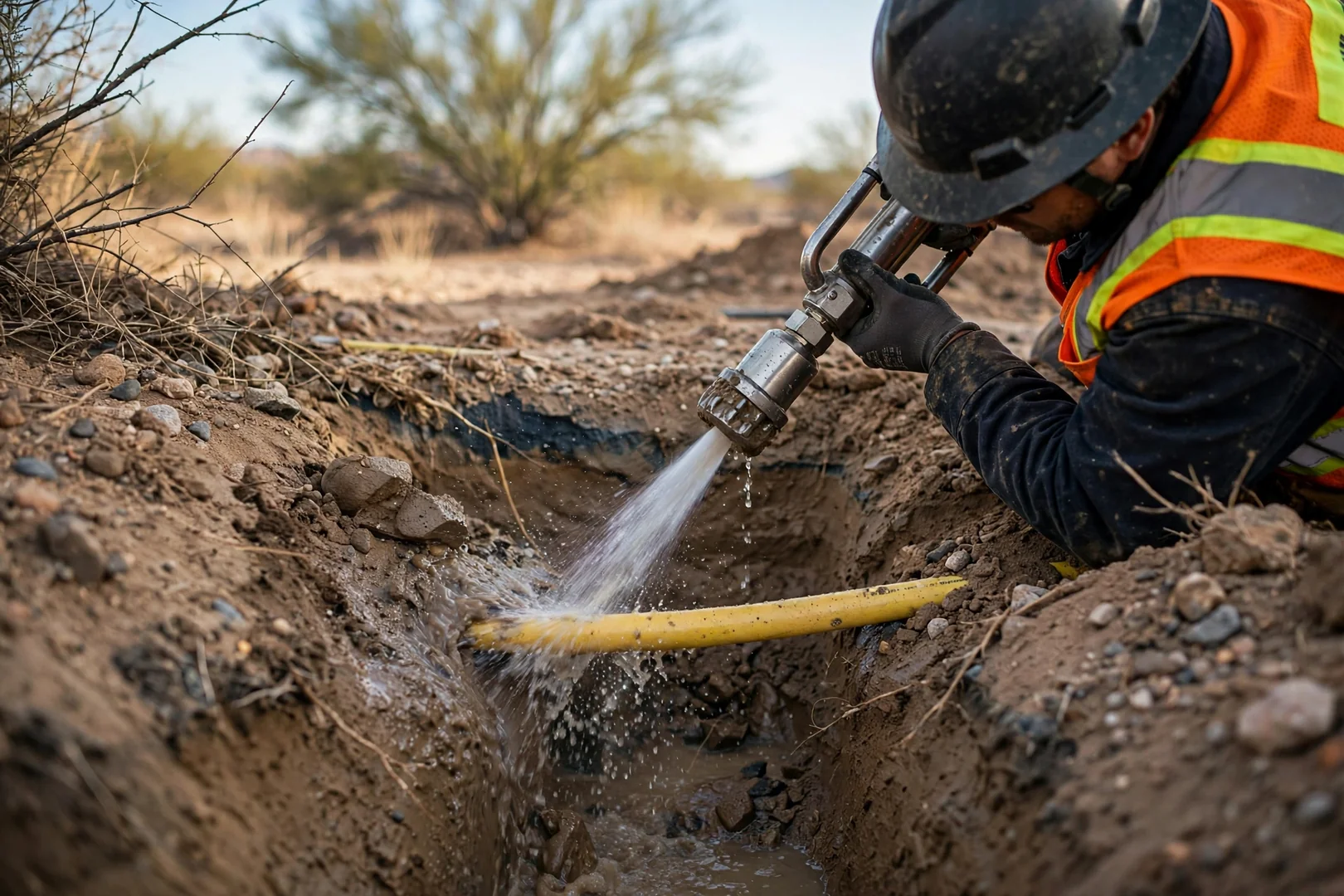
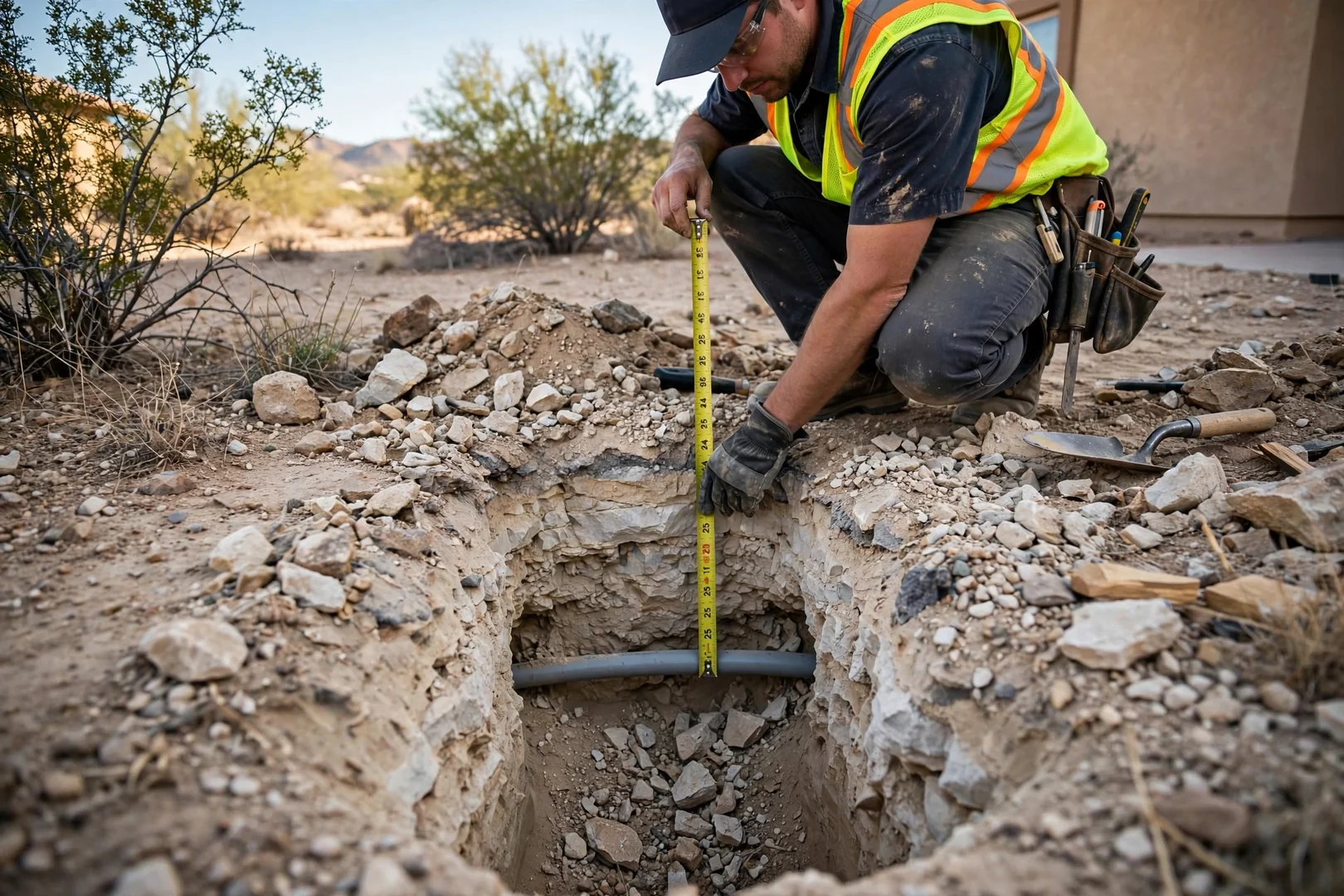
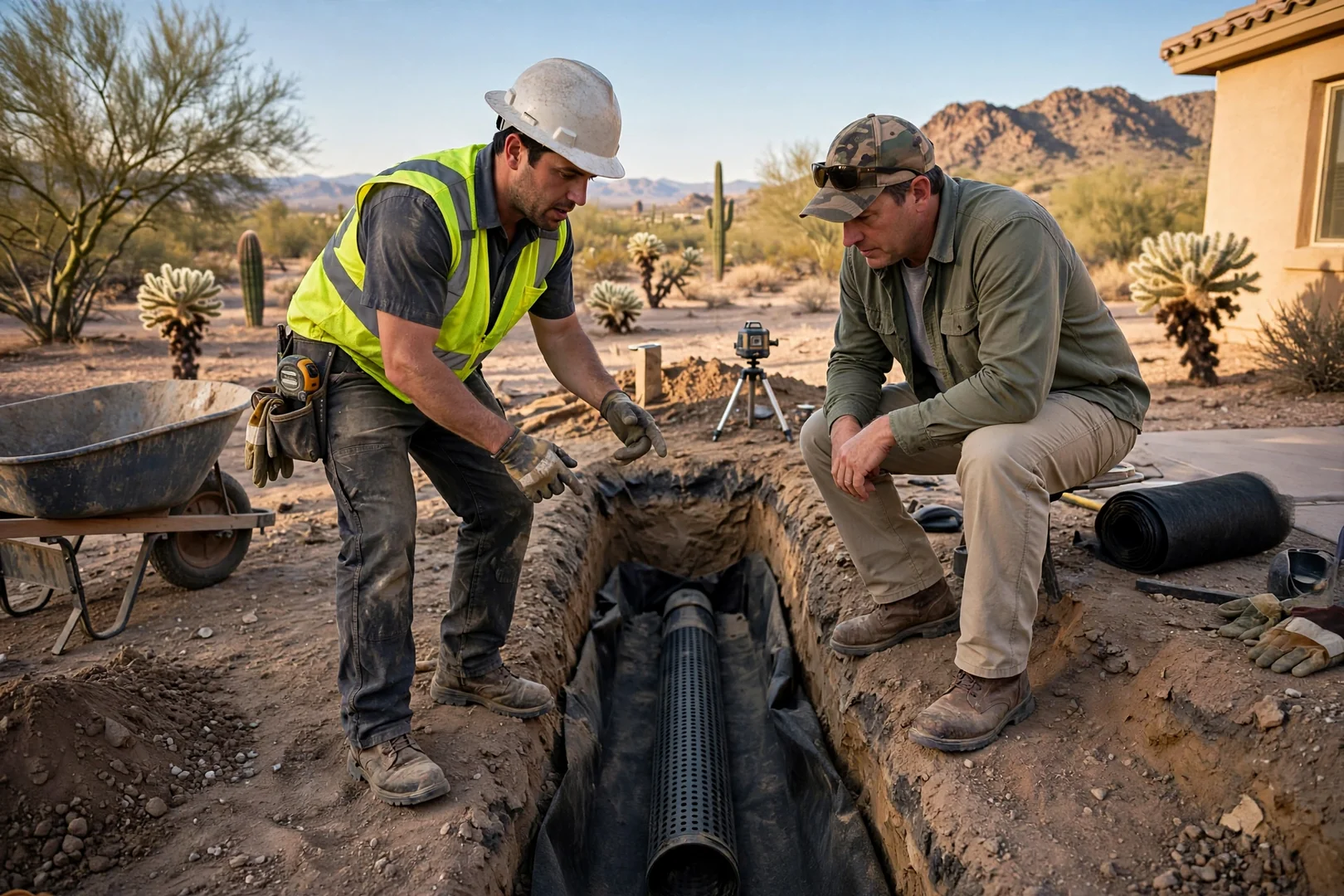
Exposed water line uncovered by pressurized water and vacuum recovery in compacted desert soil

How Does Our Hydro Excavation Process Work?

01

Utility Locating and Site Review

Every hydro excavation job starts with a walk of the work area and a review of marked utility lines, since Buckeye properties often have irrigation laterals, gas service, and fiber running closer to the surface than homeowners expect. We note soil type, slope, and nearby hardscape. Short notes become the dig plan. This upfront review is what keeps a precision dig from turning into an accidental line strike and an avoidable repair bill.

02

Equipment Staging and Surface Protection

The vacuum truck, pressurized water lance, and spoil tank are positioned to keep hoses short and travel over your landscaping minimal. Driveways, pavers, and turf get mats or plywood protection before anything rolls across them. Containment matting catches slurry splash. Protecting finished surfaces at this stage preserves their condition long after the dig is backfilled, which matters on the desert-adapted yards common around Buckeye.

03

Controlled Water Cutting

A regulated water stream breaks the soil into slurry without the blunt force of a steel bucket or trenching blade. Pressure is dialed to match caliche content, clay, or loose fill, so the dig stays accurate within inches. Utilities stay intact. This non-destructive method is why hydro excavation is used for daylighting lines, potholing before trenching, and exposing pipe or conduit that must remain in service for years to come.

04

Simultaneous Vacuum Removal

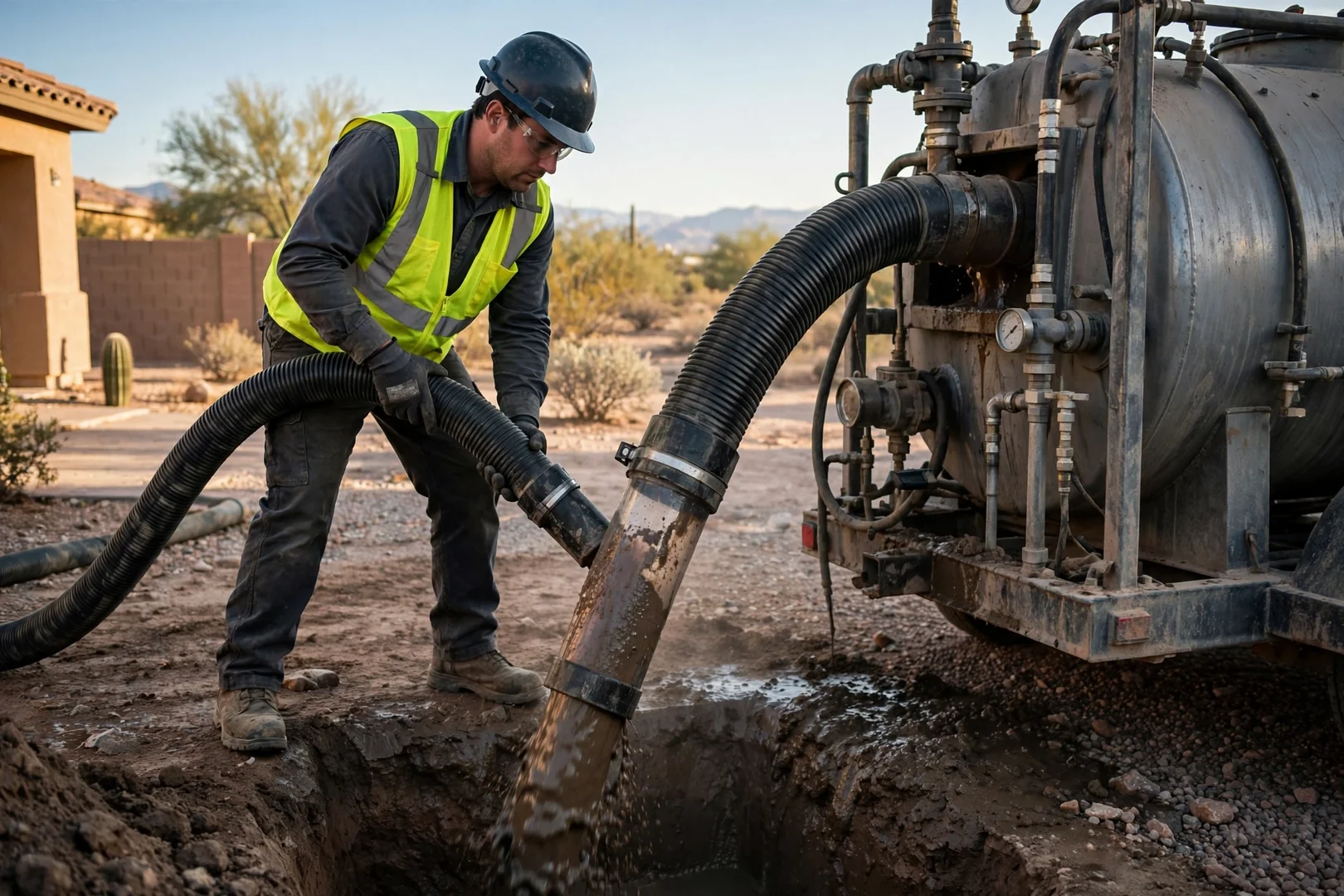
As soil liquefies, the vacuum unit lifts the slurry straight into a sealed debris tank instead of leaving spoil piles on your yard. That keeps the hole walls stable, the work zone clean, and dust down during dry Buckeye months. Nothing washes into the street. Hauled material is disposed of properly, and we confirm the final depth and clearance around the exposed utility before any work continues.

05

Backfill, Compaction, and Walkthrough

Once the exposed line or conduit has been inspected or tied in, the excavation is backfilled in lifts with suitable material and compacted to limit future settling. Settling is what cracks slabs and sinks pavers later, so compaction is treated as part of the repair, not an afterthought. We restore the surface as closely as site conditions allow. A post-job walkthrough covers depths found, backfill method, and what to watch for over the next few seasons.

How Much Does Hydro Excavation Cost in Buckeye?

Hydro excavation pricing in Buckeye depends primarily on excavation depth, the number of potholes or daylighting locations needed, soil conditions such as caliche or compacted clay, and site access for the vacuum truck. Depth drives time, and time drives cost, because a two-foot utility pothole and an eight-foot daylighting dig require very different water volumes and vacuum cycles. Access matters too. A line sitting behind a narrow gate or under mature landscaping means longer hose runs and more careful surface protection than an open front-yard dig. Spoil volume and disposal are the next factors homeowners ask about, since slurry must be hauled and disposed of properly rather than left on site. Backfill and compaction requirements also influence the figure, especially when the excavation sits under a driveway, sidewalk, or slab where future settling would cause real damage. Most 2026 hydro excavation requests in Buckeye fall into predictable ranges once depth, location count, and restoration needs are known, but exact numbers always require a site assessment because no two yards have the same soil profile or utility congestion. We provide free written estimates that itemize mobilization, dig locations, expected depth, spoil handling, and backfill method so nothing is a surprise later. Reviewing the estimate line by line also shows where a precision method protects long-term value, since an intact pipe or conduit outlasts one nicked by a blade and patched. Ask questions before work starts. Call 480-462-6688 or email help@buckeyeexcavationexperts.com to schedule a property review and get your written estimate.

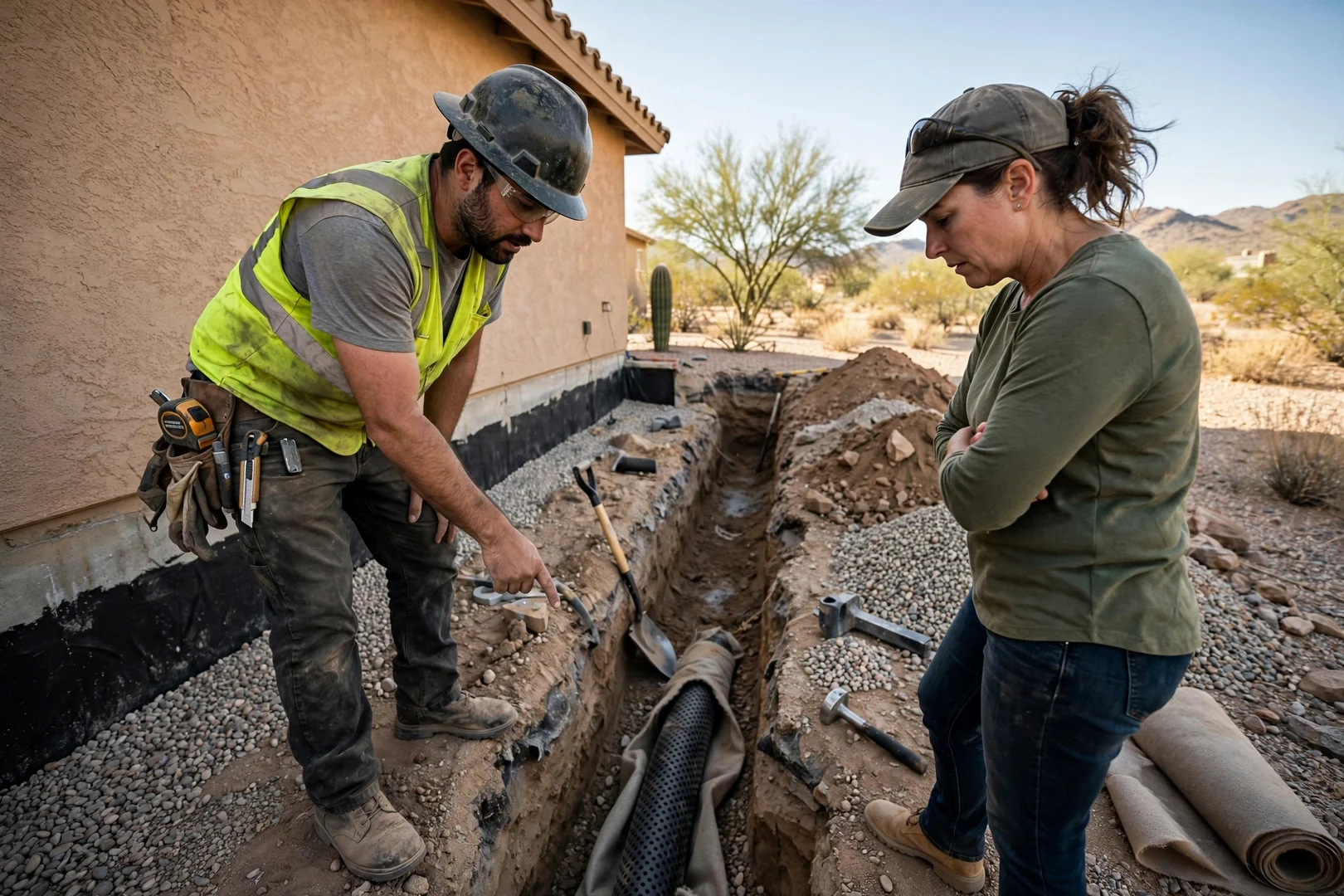
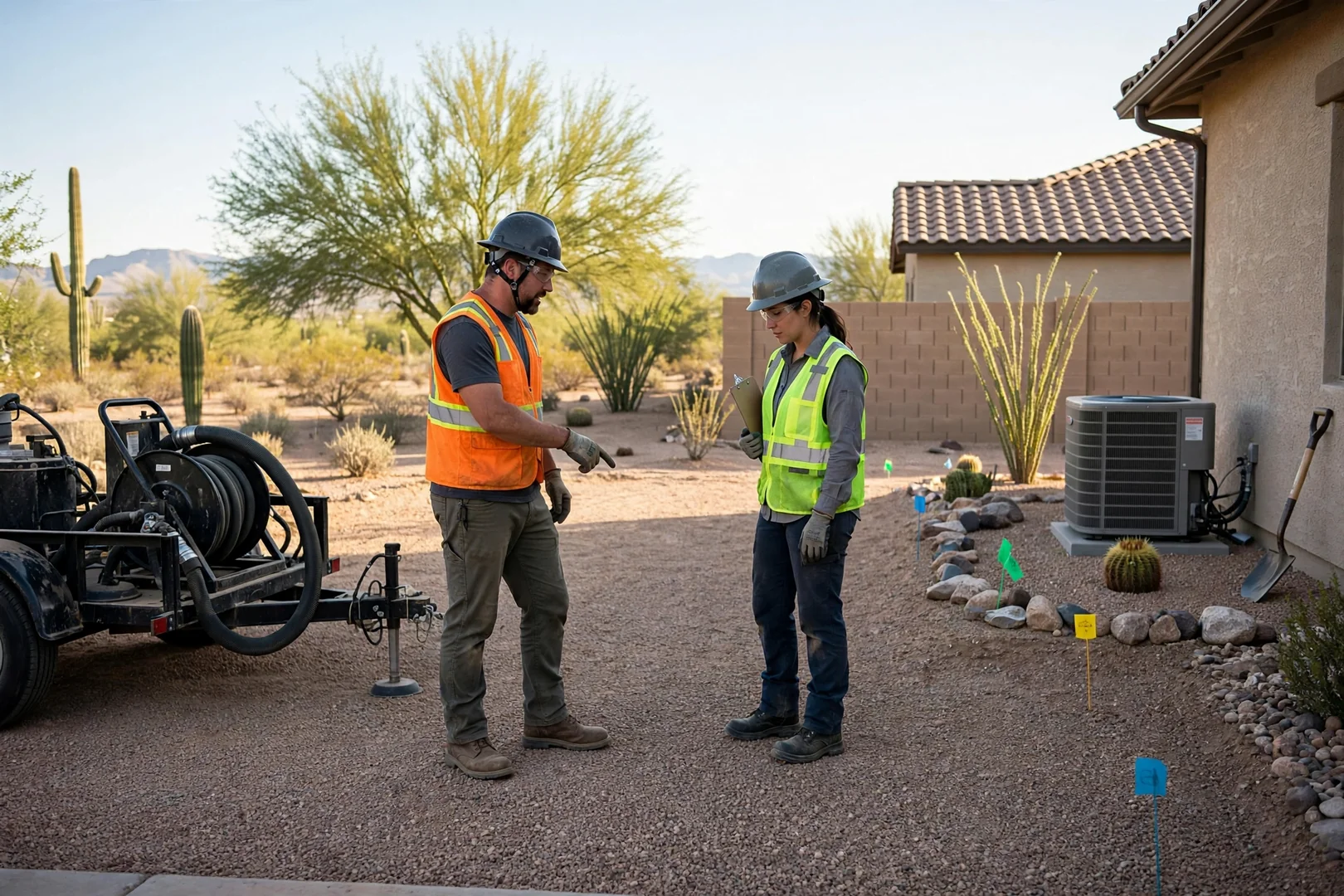
Hydro excavation vacuum truck parked beside a marked utility dig site on a Buckeye property

Recent Hydro Excavation Jobs

Hydro Excavation Work Completed in Buckeye in 2026

Hydro excavation requests across Buckeye this year have ranged from single utility potholes in established neighborhoods to multi-point daylighting on larger lots with well lines and long irrigation runs. Caliche layers, compacted desert fill, and tightly spaced gas and fiber service have all shaped how pressure and vacuum settings were dialed in on site. Several jobs involved exposing sewer laterals and conduit beneath driveways, where slab protection and layered backfill mattered as much as the dig itself. Each excavation ends with compaction in lifts and a surface restoration approach meant to limit settling years down the road. That focus on durability is the point. Keeping lines undamaged and backfill properly placed protects the systems homeowners depend on and preserves yard and hardscape condition over time.

Close-up of a water lance exposing a buried gas line during precision hydro excavation
Wide shot of a vacuum excavation truck staged on a residential Buckeye street
Narrow utility pothole revealing intact conduit in caliche soil at measured depth
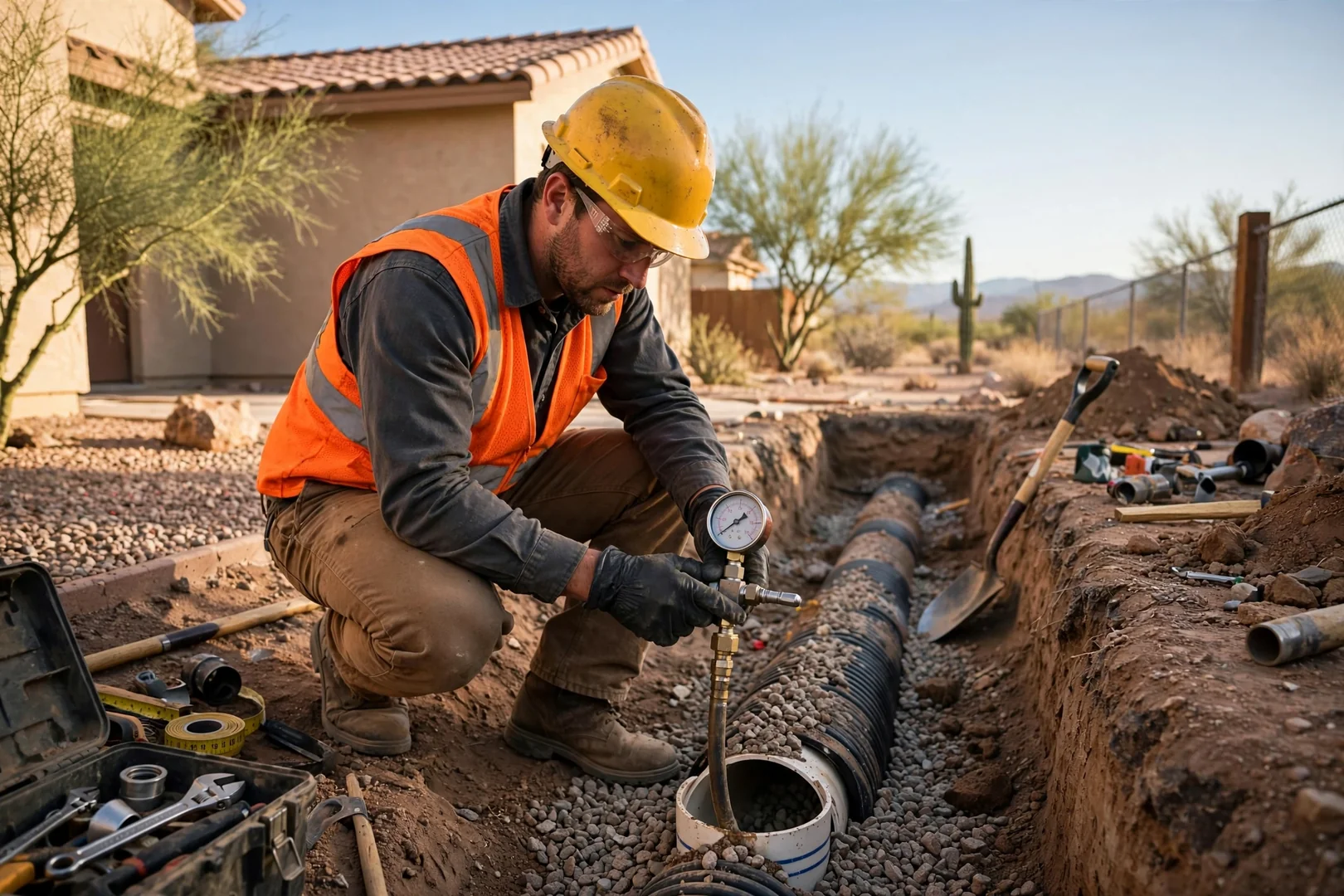
Buckeye Excavation Experts technician testing system performance
Operator guiding vacuum hose as soil slurry lifts into a sealed debris tank
Buckeye Excavation Experts technician reviewing Excavation Contractor equipment in Buckeye, AZ
Backfilled excavation compacted in lifts with surface restored flush to surrounding grade
Finished residential yard with no spoil piles after completed hydro excavation work

Hydro Excavation Questions

Hydro Excavation FAQs for Buckeye Homeowners

Homeowners usually have practical questions before pressurized water digging begins near buried lines. The answers below cover scheduling, site preparation, spoil handling, and cost factors we discuss with Buckeye property owners throughout 2026. Each explanation reflects how the work actually unfolds on a residential lot.

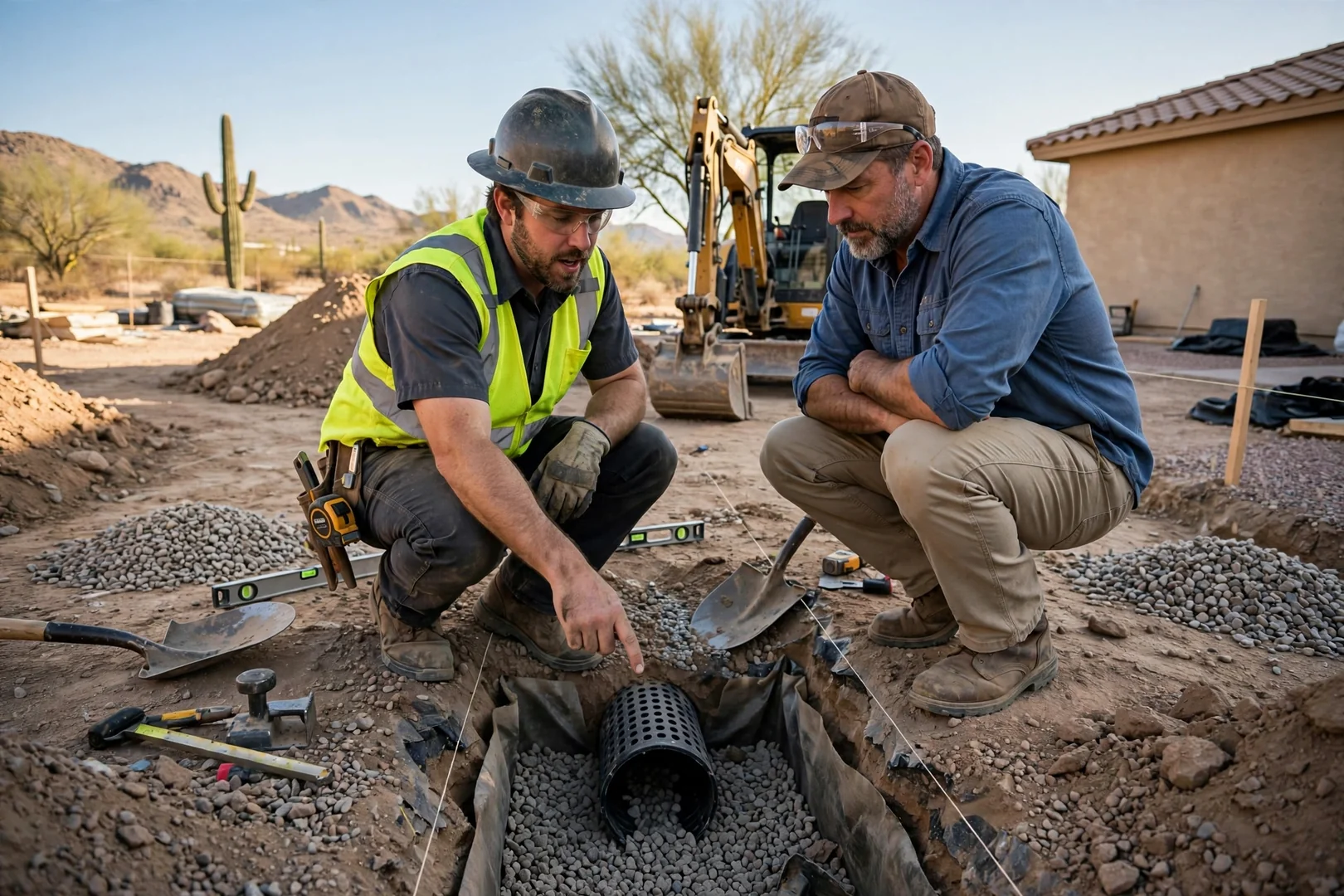
Hydro excavation truck using pressurized water to expose buried utility lines in a residential yard

Scheduling depends on utility locate requests, since the required 811 blue stake notification must be filed and cleared before any vacuum excavation work starts on your property. We coordinate that step with you, then set a dig window once the markings are confirmed. Daytime slots in Buckeye tend to fill faster during spring and fall when irrigation and landscape projects overlap.

Free Hydro Excavation Estimates

Schedule Hydro Excavation in Buckeye

Call Us: 480-462-6688

Planning a utility repair, pipe exposure, or daylighting job around buried lines starts with knowing exactly what sits below the surface. Our team provides free written estimates that spell out the scope of the vacuum excavation work, the access points we expect to use, and how the spoil will be handled once the soil is removed. There is no obligation attached. Reviewing the numbers on paper helps homeowners compare options calmly instead of guessing at costs. Buckeye soil conditions vary widely between older neighborhoods and newer subdivisions, so we look at your property before quoting rather than applying a flat figure. Caliche layers, shifting irrigation lines, and tightly spaced utility corridors all affect how pressurized water and vacuum equipment are set up. Scheduling is kept flexible through 2026 so trenching, plumbing, or landscape crews can be sequenced without idle time. That coordination protects the surrounding grade and keeps restoration work minimal. Precise, non-destructive digging preserves pipe coatings, conduit sleeves, and compacted bedding that aggressive mechanical methods often damage, which extends the service life of everything underground. Call or email to describe what you need located or exposed, and we will arrange a site review, confirm the approach, and walk the finished area with you before packing up. Reach out today and get your Buckeye hydro excavation project moving.

Hydro excavation truck using pressurized water to expose buried utility lines on a Buckeye property