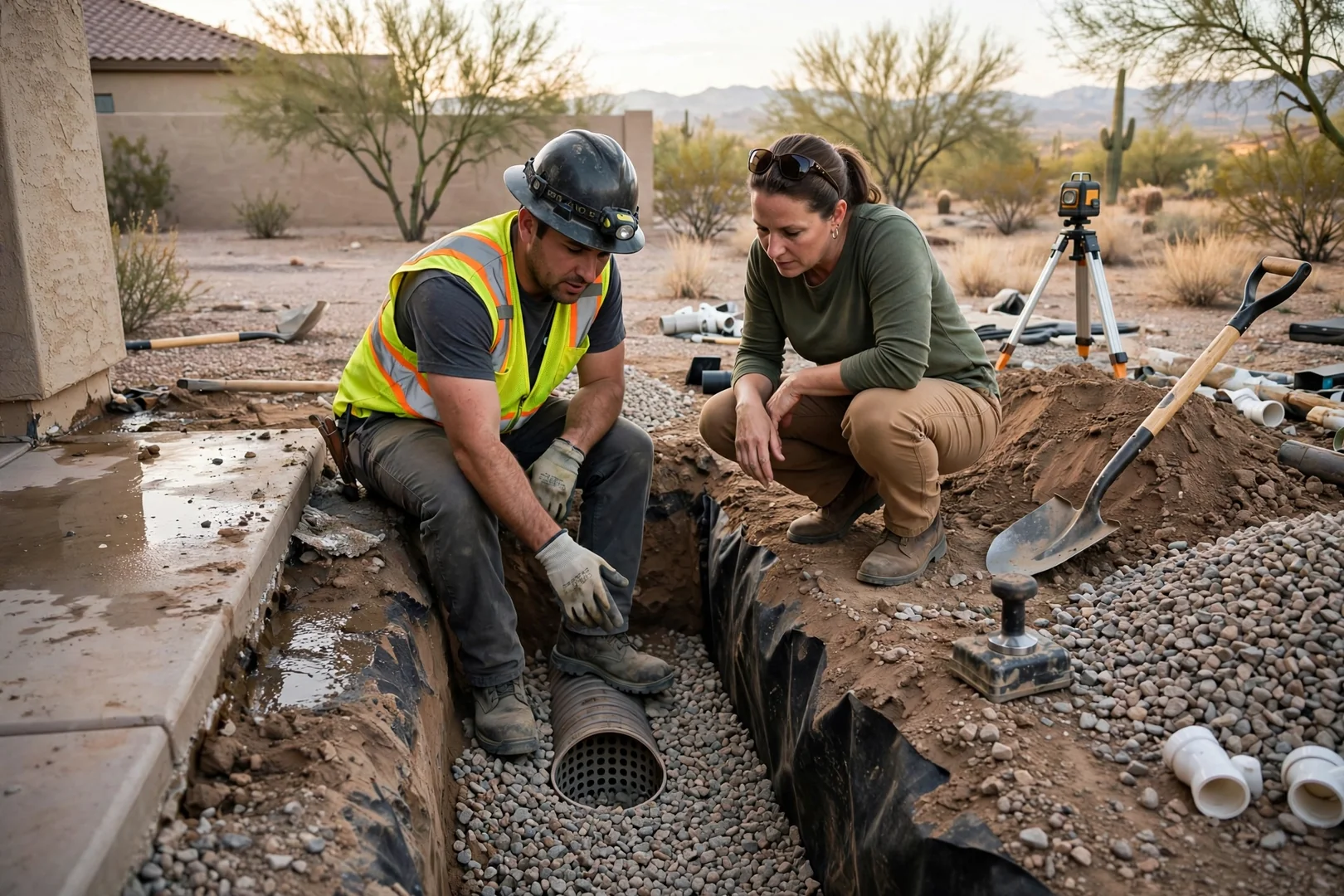
Trenching & Utility Excavation in Buckeye, AZ

Trenching and utility excavation is the controlled digging of narrow, measured channels that carry water lines, sewer laterals, electrical conduit, and irrigation piping safely below grade. Homeowners, builders, and property managers across Buckeye rely on it whenever a new line is added, an aging service lateral is replaced, or a detached casita, shop, or pool equipment pad needs power and water run to it. Local caliche layers and compacted desert soils make trench depth, bedding material, and backfill compaction decisions far more important here than in softer ground, since poor compaction leads to surface settling and pipe stress years later. Our crews handle utility locating, open-cut trenching, shoring where depth requires it, and layered backfill that holds its shape over time. Scheduling for 2026 is open, including cooler-season work before monsoon runoff reshapes open ground. Buckeye Excavation Experts manages each trench from first locate marking to the final post-job walkthrough and written estimate review.

Request a Written Estimate 480-462-6688

Plan Your Trenching Project

Share your property details and utility needs, and our team will follow up with a written estimate and a clear scope for the trench work.

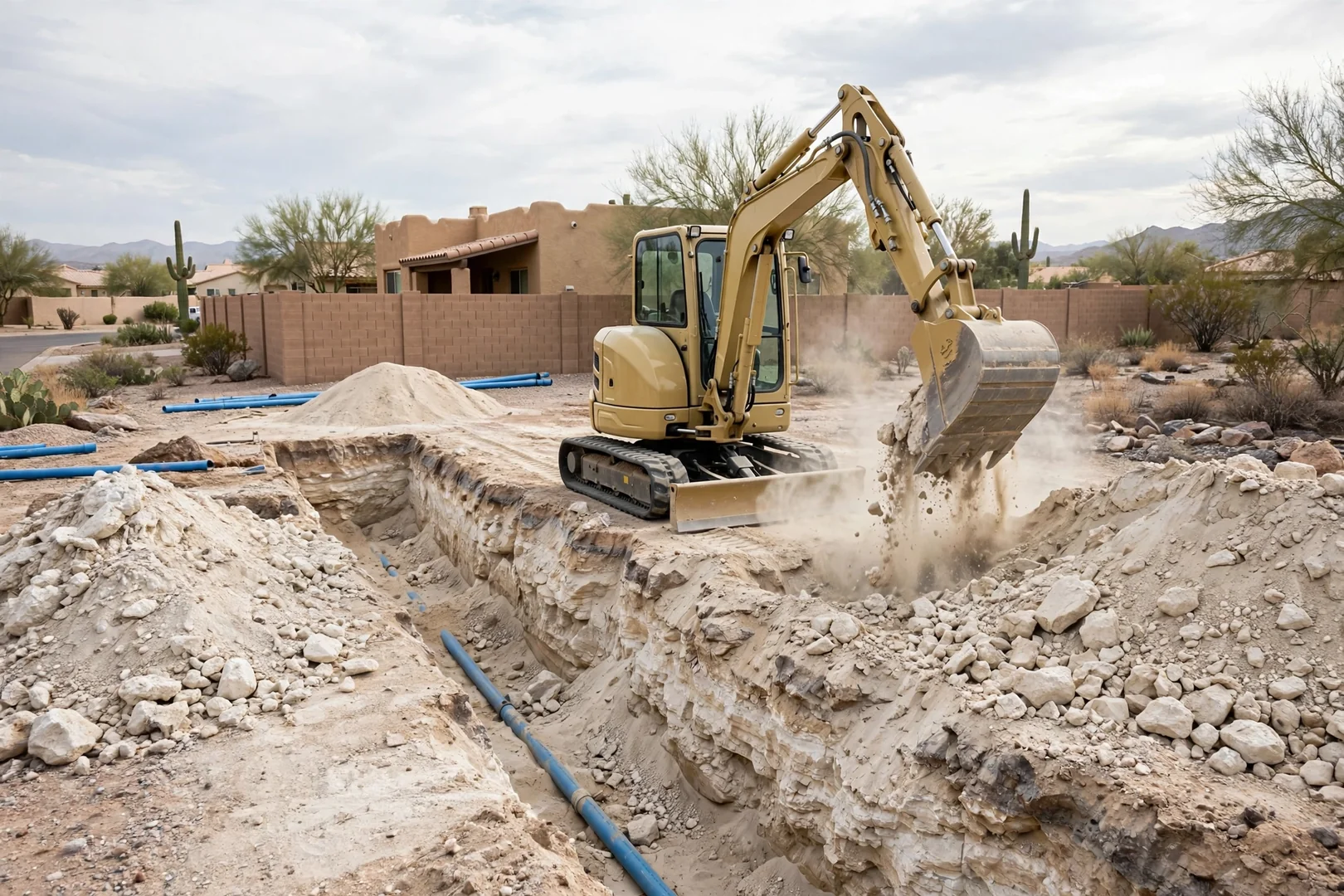
Excavator cutting a utility trench across a desert residential lot in Buckeye

What Our Trenching & Utility Excavation Service Includes

Trenching and utility excavation is the process of cutting precise linear channels into the ground to install, repair, or replace underground utilities, and at Buckeye Excavation Experts it includes utility locating, trench cutting, pipe bedding, backfill, and compaction across Buckeye properties. Work begins with marking existing lines, then confirming depth requirements and soil conditions before a blade or bucket ever touches the ground. Our operators match equipment to the job, using compact trenchers for shallow irrigation and low-voltage runs and excavators with narrow buckets for deeper sewer laterals and water mains. Spoil is staged away from the trench edge to keep walls stable, and granular bedding is placed beneath piping so rock and caliche fragments cannot press against the line.

Backfill is where long-term durability is won or lost. Instead of pushing loose soil back into the trench, material is returned in lifts and compacted in stages so the surface holds grade through seasonal moisture swings and monsoon runoff. That practice protects driveways, pavers, and turf from the sunken trench lines that show up years after a rushed installation. Residential lots, commercial pads, and multi-unit properties each get a slightly different approach based on traffic loads and surface restoration needs. Our 2026 scheduling favors cooler months for larger runs, when soil moisture and compaction behave more predictably. Every project closes with a post-job walkthrough so you understand what was installed, how deep it sits, and what to expect from it over the coming decades.

Related Excavation Services

What Signs Mean Your Property Needs Trenching & Utility Excavation?

Signs that a Buckeye property needs trenching and utility excavation include sunken or soft strips of soil tracing an old pipe route, repeated water line leaks, sewer backups that return after drain cleaning, and the absence of power or water at an outbuilding you want to use. Depressions that follow a straight line usually point to a trench that was backfilled without proper compaction, allowing the soil column to settle and stress the pipe below. Wet spots on dry ground, rising water bills, and pressure loss at distant hose bibs often trace back to a failing service lateral or a cracked irrigation main buried under caliche. Slow drains paired with odor near a cleanout can signal root intrusion or a bellied sewer line that has lost its slope.

Older Buckeye neighborhoods also carry shallow, undersized conduit that was never rated for today’s electrical loads. Heat cycling and monsoon moisture speed that deterioration. Through 2026, we see more requests tied to casita additions, pool equipment relocations, and panel upgrades that need a properly bedded conduit run rather than another patch. Trenching and utility excavation resolves these conditions at the source by exposing the line, correcting depth and slope, replacing worn materials, and rebuilding the trench in compacted lifts so the repair holds its grade and keeps performing for years.

Schedule a Site Assessment
Settled soil line and wet spot marking a failing buried water line on a Buckeye property

How Does Our Trenching and Utility Excavation Process Work?

01

Site Review and Utility Locating

We walk the property with you, mark the proposed trench route, and arrange utility locates so buried gas, water, power, and irrigation lines are identified before excavation starts. Soil conditions, slope, and access points for equipment are noted at the same time, which shapes the dig plan and the written estimate you receive.

02

Layout, Depth Planning, and Permitting Support

Trench depth and width are set according to the utility type, required cover, and local Buckeye requirements for the line being installed. We confirm grade and fall for gravity lines, flag where the route crosses driveways or landscaping, and help gather the documentation inspectors expect so the work passes without rework.

03

Controlled Excavation

Excavation moves along the staked route using the right machine for the space, from compact trenchers in tight side yards to excavators for deeper runs. Near marked conduit we switch to hand digging or hydro excavation, a slower method that protects existing lines. Spoil is stockpiled on one side to keep the work area stable and walkable.

04

Bedding, Installation Support, and Inspection

Once the trench is open, we place sand or select bedding beneath the pipe or conduit so sharp rock and caliche fragments cannot wear the material over time. Plumbers, electricians, or irrigation crews work in a trench that is clean, shored where needed, and held to the planned grade. Nothing is covered until the line has been checked.

05

Backfill, Compaction, and Final Walkthrough

Backfill is placed in measured lifts and compacted as it rises, which is what prevents the sunken strips and cracked hardscape that show up months after a poorly closed trench. Surface areas are graded back to drain away from the home, and we finish with a post-job walkthrough plus notes on depth and routing for your records.

How Much Does Trenching and Utility Excavation Cost in Buckeye?

Trenching and utility excavation pricing in Buckeye depends primarily on trench length, required depth, soil conditions, and site access, with most 2026 residential projects priced by the linear foot once those variables are known. Caliche layers and compacted desert soils slow progress and sometimes call for a breaker attachment, which changes both labor hours and equipment needs. Depth matters just as much, since a shallow irrigation line and a deeper sewer run with required cover are two very different excavations. Access is the third driver, because a trench reachable by a standard excavator costs less than one threaded through a narrow side yard by hand or with hydro methods. Several other items show up on most estimates. Utility locating and the hand-digging or vacuum excavation required around marked lines add time but protect buried conduit from damage. Bedding material, imported backfill, haul-off of excess spoil, and compaction testing are priced separately when a project calls for them. Surface restoration also factors in, especially where a trench crosses concrete, pavers, or established landscaping that needs to be cut and rebuilt. Exact numbers always require a site assessment. Measuring the route, checking soil, and confirming depth on location is the only honest way to price this kind of work. We provide free written estimates that itemize excavation, bedding, backfill, compaction, and restoration so Buckeye homeowners can see where every dollar is going before work begins.

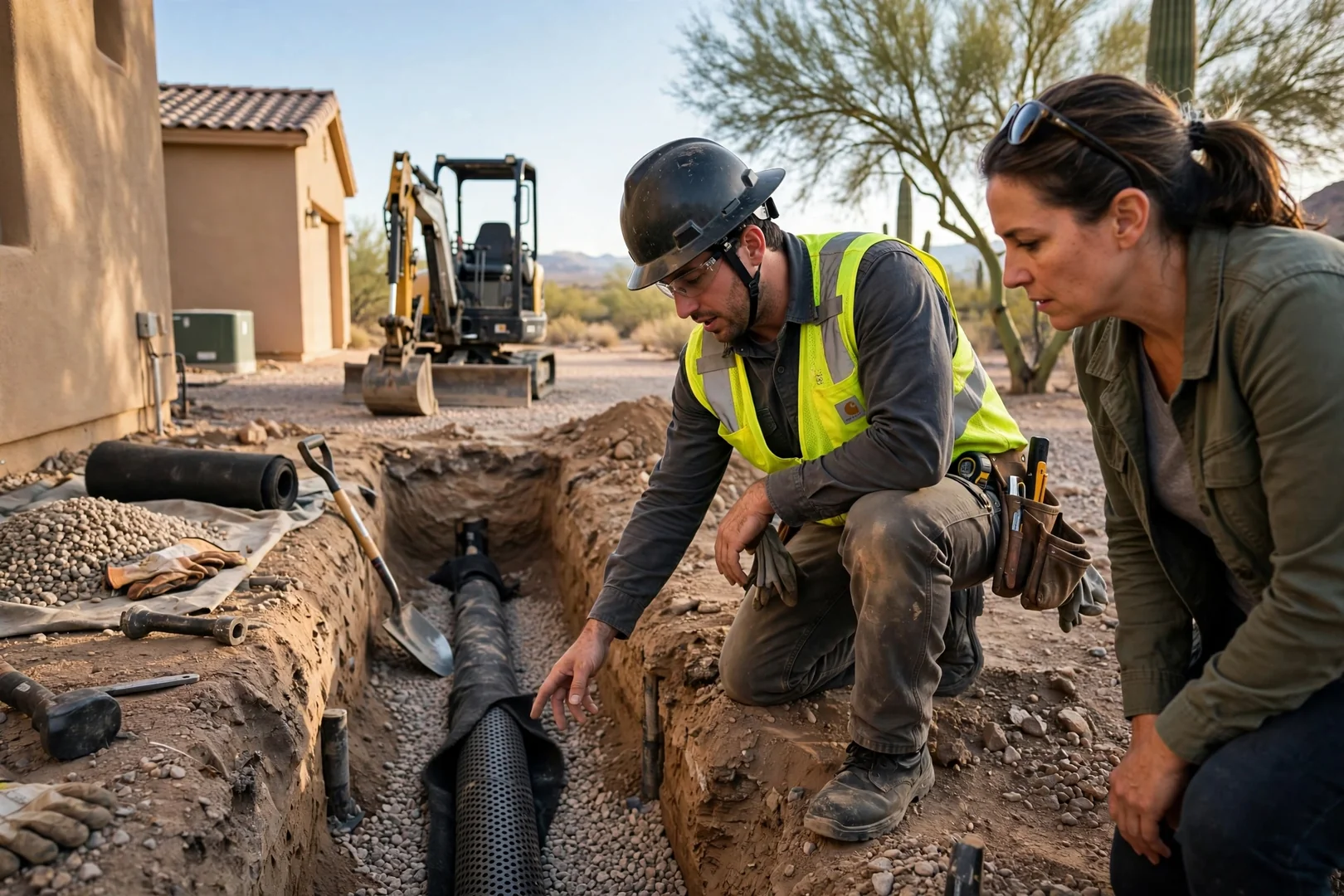
Open utility trench with marked line flags beside a Buckeye home awaiting pipe installation

Recent Trenching Projects

Recent Trenching and Utility Excavation Projects in Buckeye

Trenching work across Buckeye in 2026 has covered a wide mix of properties, from newer subdivision lots with tight side yards to older acreage parcels where irrigation and well lines run in unexpected directions. Some projects involved short conduit runs for landscape lighting and sub-panels; others called for deeper sewer and water service trenches that had to hold consistent grade across a long route. Caliche shows up often here, so breaker attachments, trenchers, and hand digging near marked lines all get used depending on what the ground gives us. On every job, bedding material is placed beneath pipe to prevent abrasion, and backfill goes in lifts with compaction as it rises, because that single step decides whether a trench stays level for years or settles into a visible depression. Surfaces are graded to shed water away from foundations before we leave. Each project ends with a walkthrough and documented line depths so future maintenance never starts with guesswork.

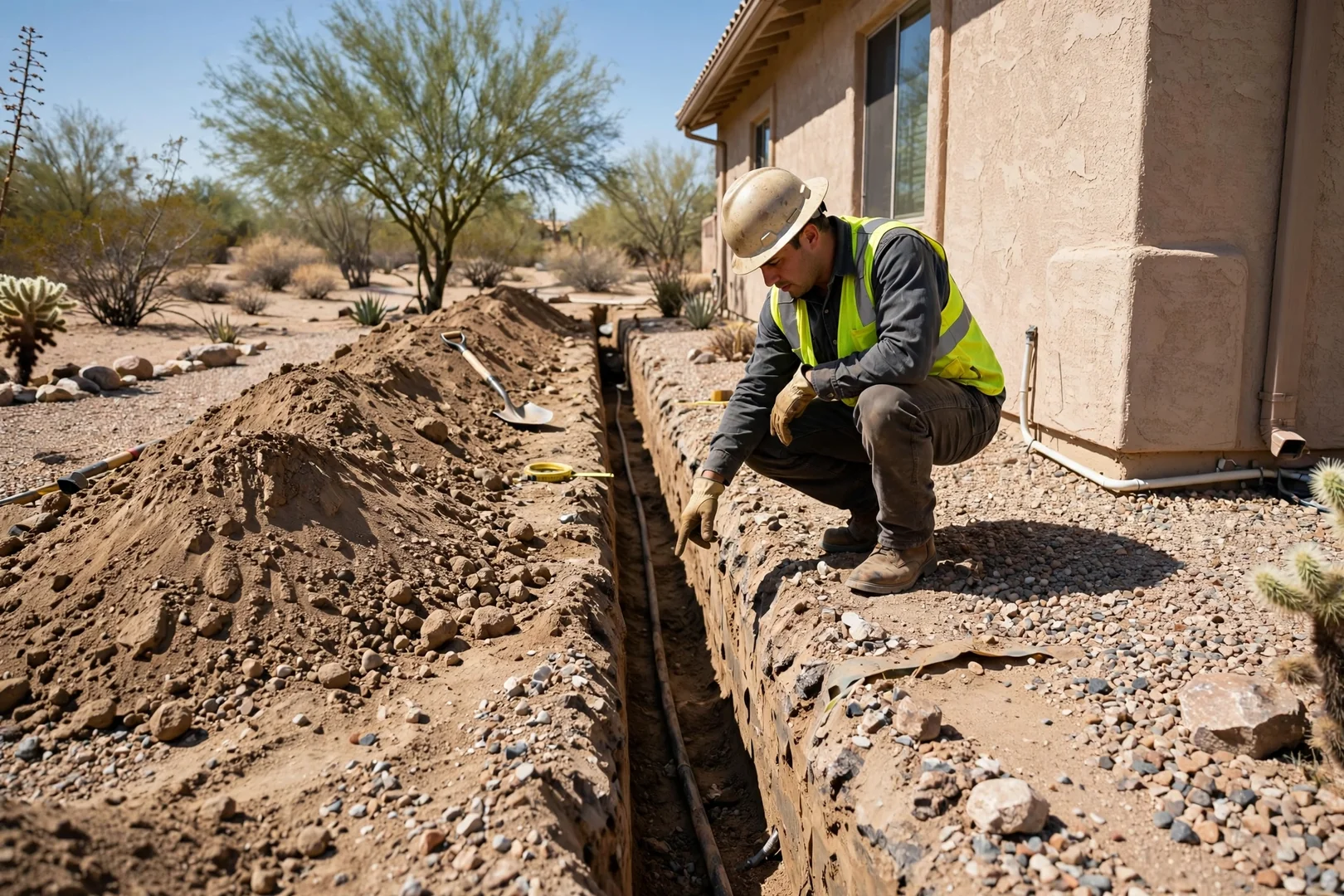
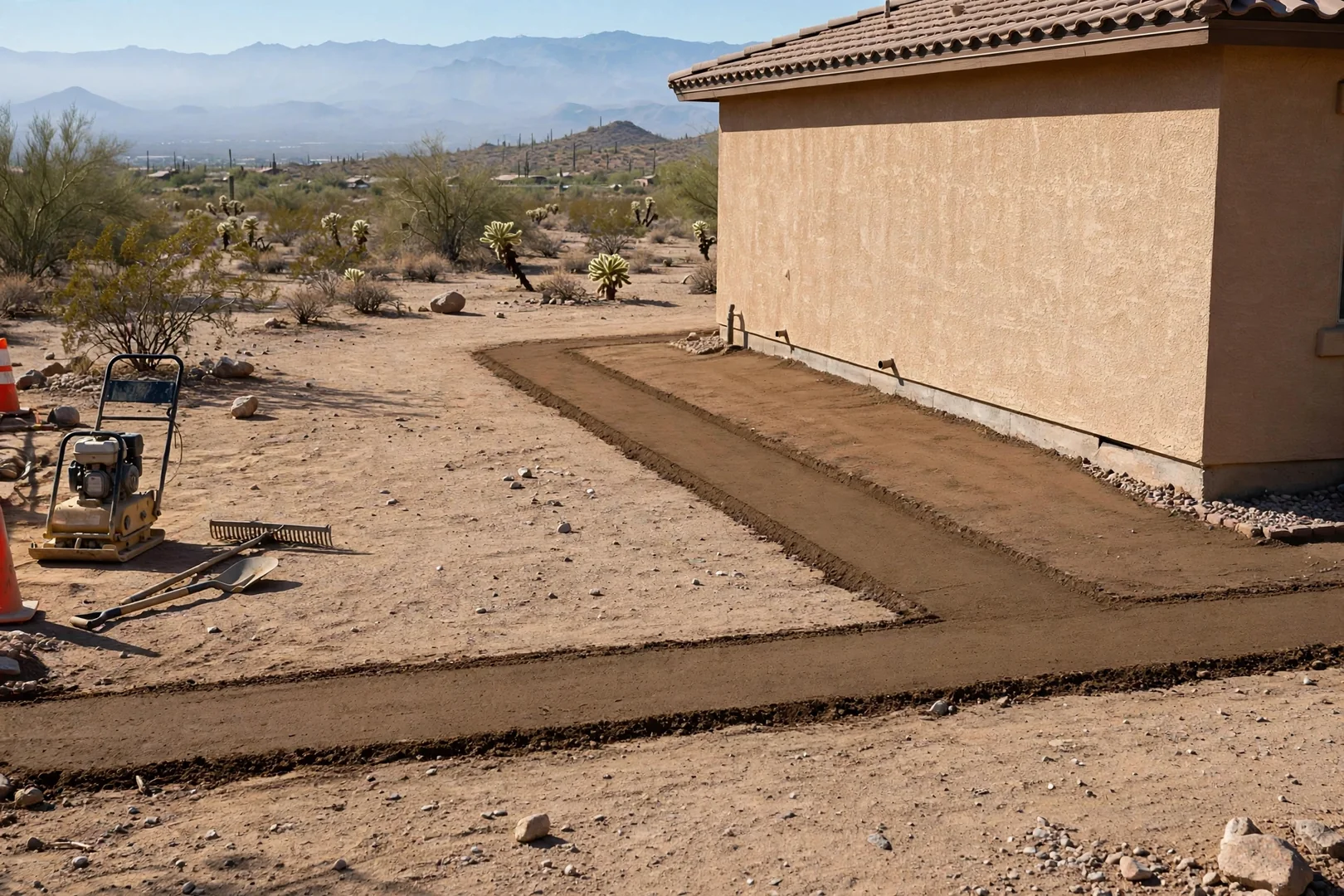
Narrow utility trench running along a desert landscaped side yard toward a home
Compact excavator cutting a water service trench through hard caliche soil
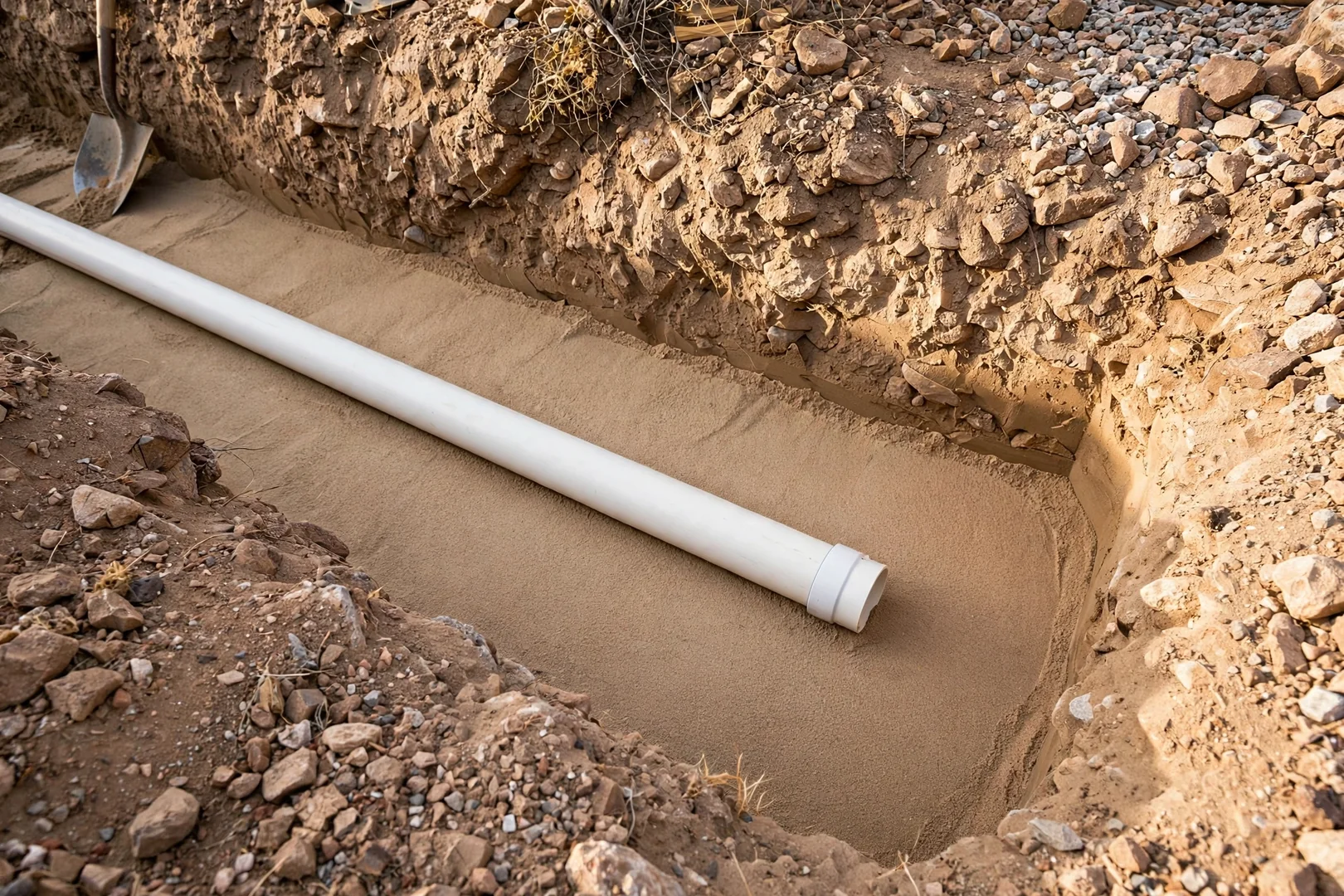
Close-up of sand bedding placed beneath new PVC pipe inside an open trench
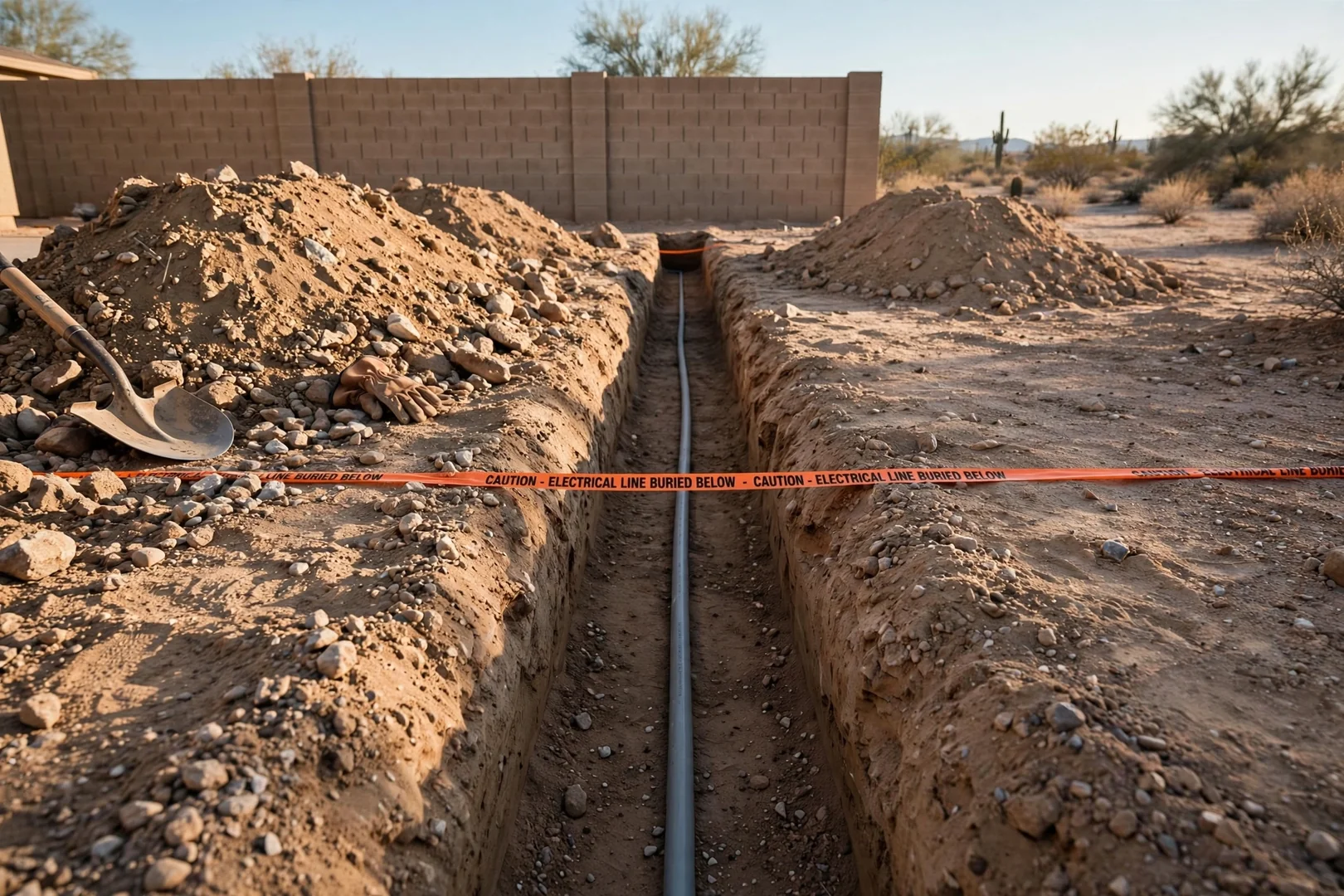
Electrical conduit laid in a trench with marking tape before backfill
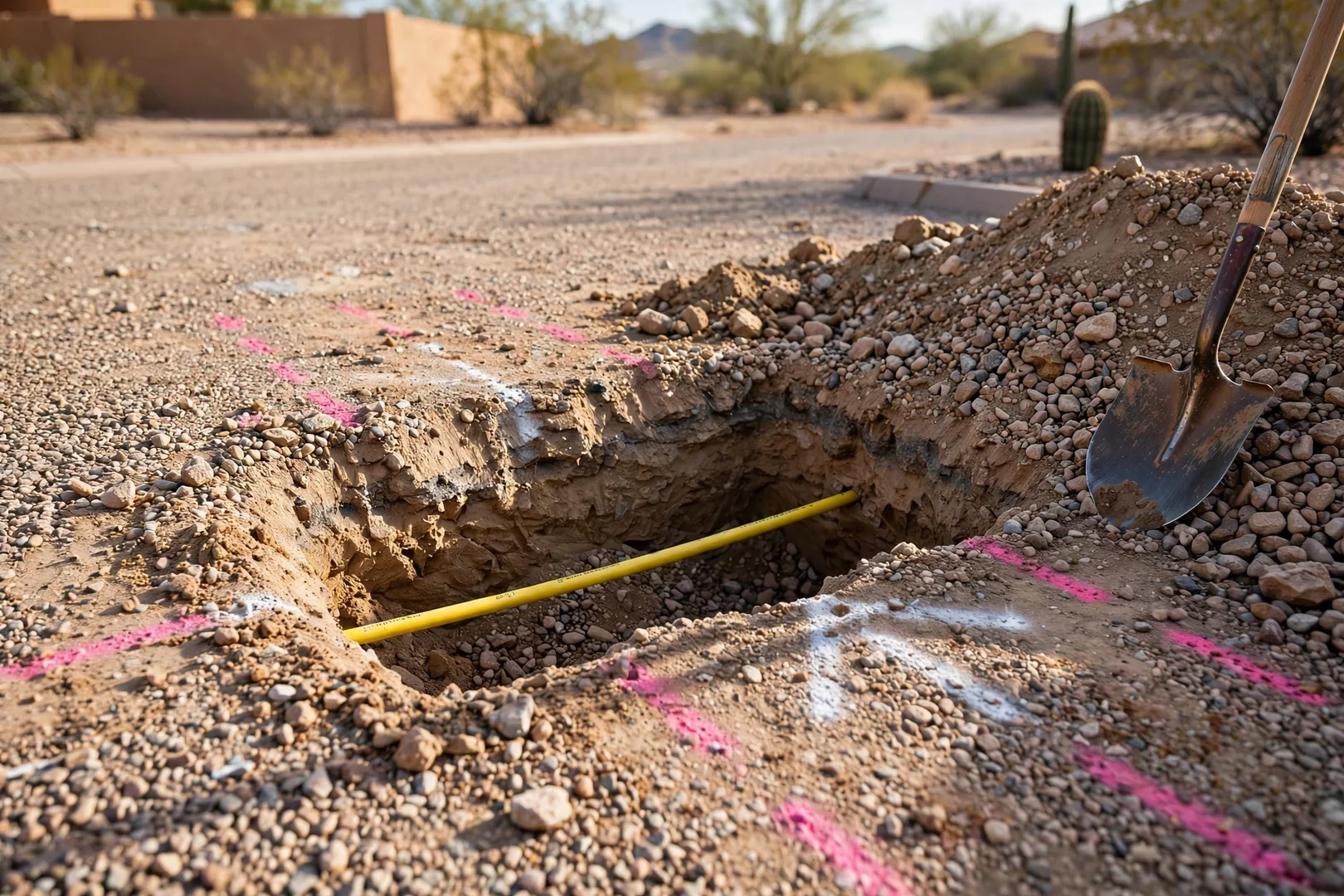
Hand digging around marked gas line to expose utility without damage
Backfilled trench compacted in lifts across a graded residential yard
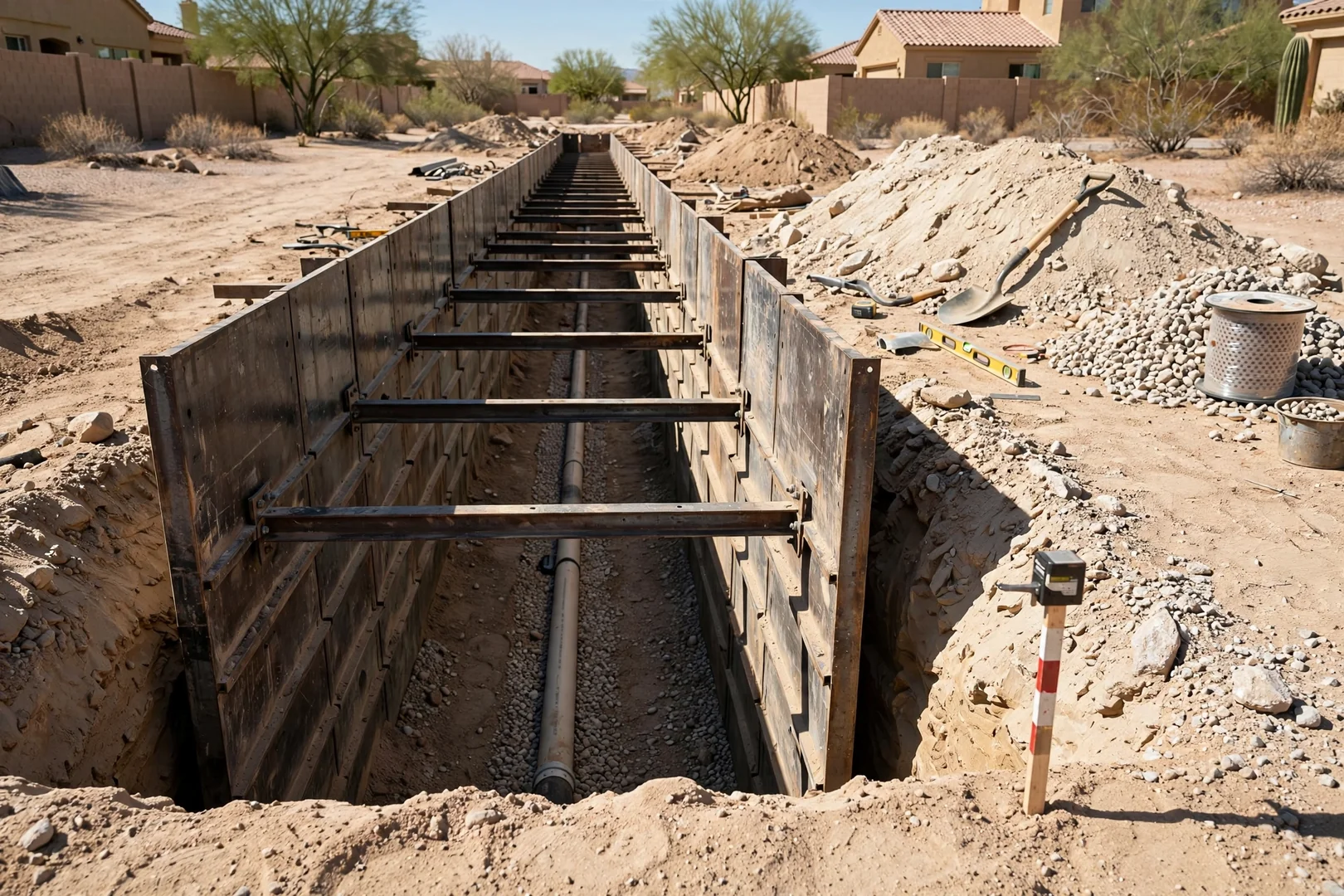
Deep sewer trench with shoring and consistent grade across a long route
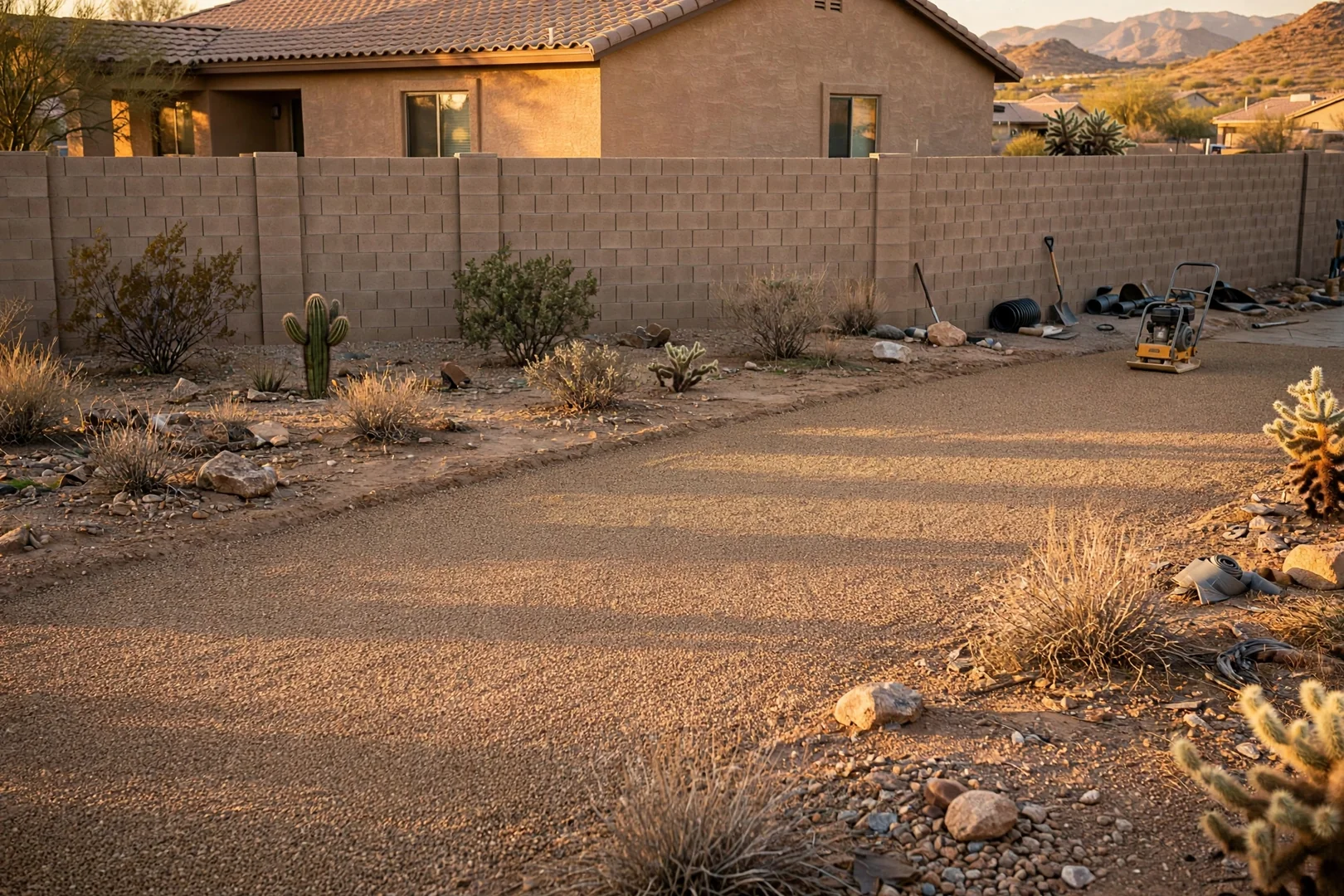
Finished trench area restored with gravel surface and no settling visible

Trenching & Utility Questions

Trenching and Utility Excavation FAQs for Buckeye Homeowners

Homeowners usually have practical questions before a trench crosses their yard. The answers below cover scheduling, what a typical utility trench job includes, how property conditions affect the work, and what shapes pricing for Buckeye customers in 2026.

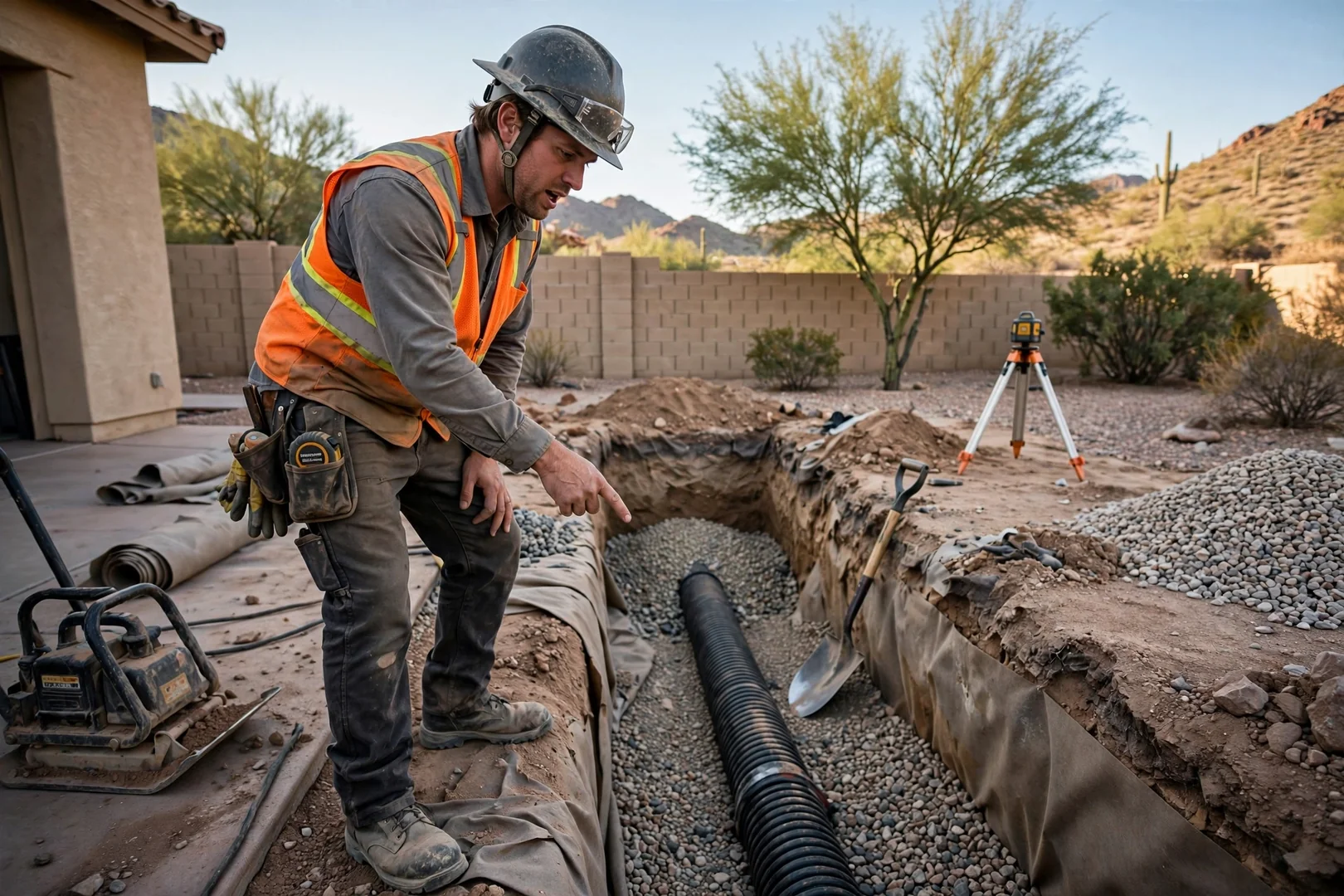
Open utility trench with conduit and compacted backfill alongside a residential driveway

Plan on contacting us well before your target start date, since every trench requires utility locating through Arizona 811 and that marking period must be honored before any blade touches soil. Permit review for right-of-way or road crossings can add time as well, so earlier calls give more flexibility. Through 2026 we continue to schedule locate requests, inspections, and excavation in sequence rather than stacking them.

Free Trenching Estimates

Schedule Trenching and Utility Excavation in Buckeye

Call Us: 480-462-6688

Planning a utility line, irrigation main, or conduit run in 2026 starts with understanding what sits below your yard. Our team walks the route with you, reviews locate markings, and explains how trench depth, bedding material, and compaction will affect the line’s long-term performance. Every project begins with a free written estimate, so you can see scope and pricing before committing to anything. There is no obligation attached to a site visit. Buckeye soils shift between caliche layers and loose sand, which changes how a trench must be shored, backfilled, and restored, and those details belong in a conversation rather than a guess over the phone. Scheduling is straightforward once you decide the timing works for your property. Call or email to describe your project, and we will arrange a walkthrough, outline the excavation sequence, and give you a clear written scope for the work ahead. Protect your utilities for the decades to come. Reach out today and get your trenching project on the calendar.

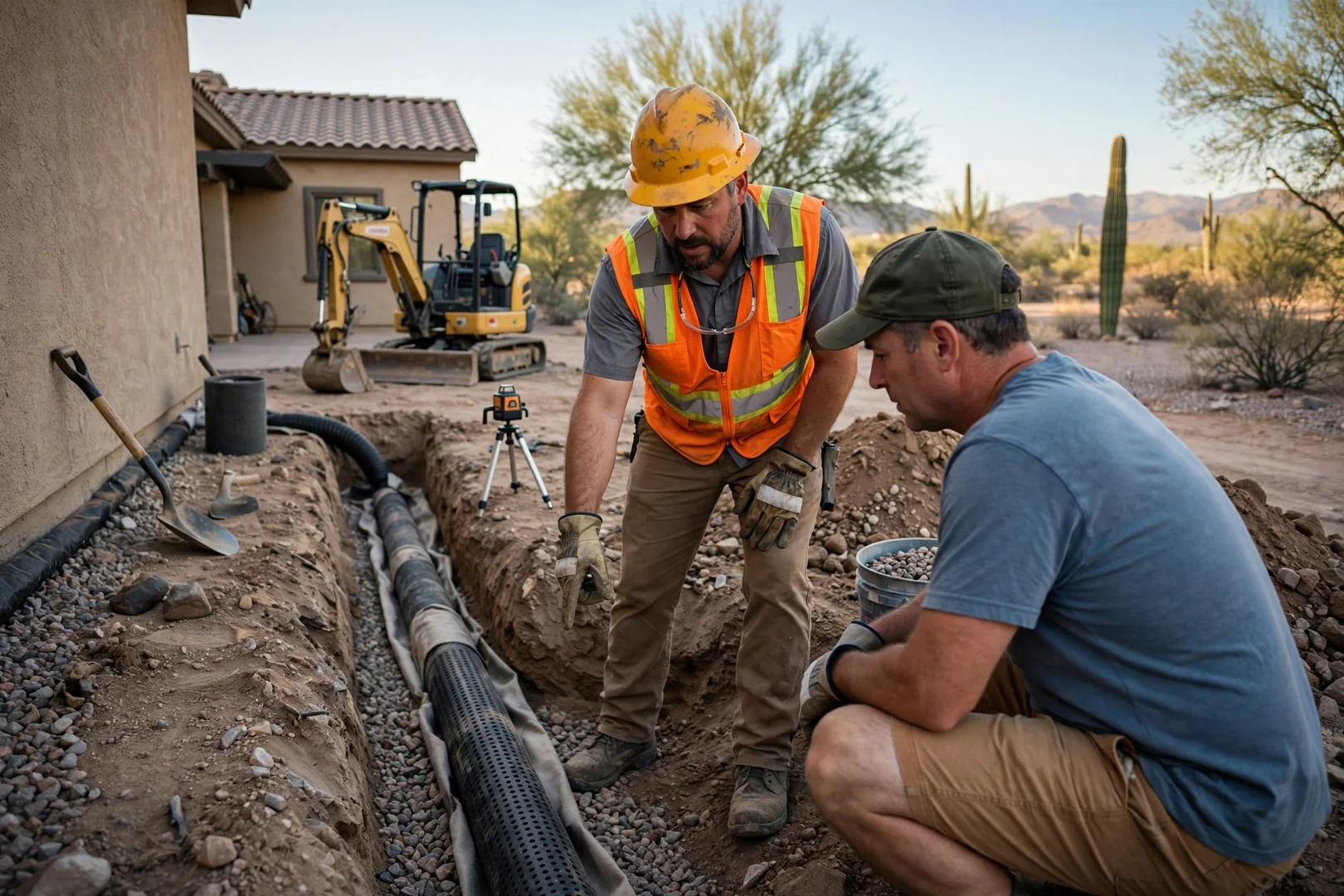
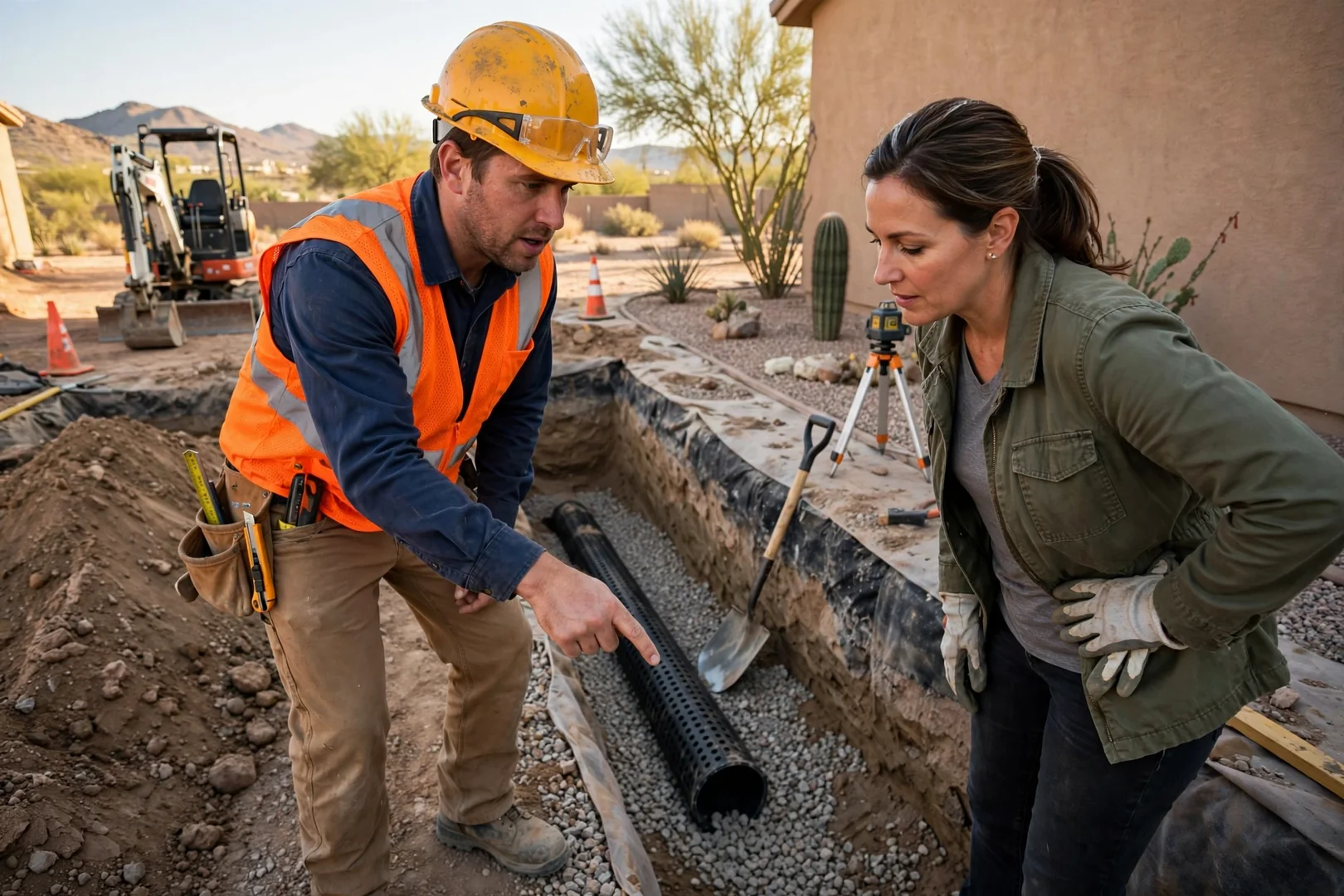
Excavation crew reviewing trench route markings on a residential Buckeye property at sunrise